Not every government education or training program has a graduating class of 100, 500 or 1,000 participants. Many public-sector programs operate with small cohorts, specialized classes, multiple training locations or participants who complete programs at different times throughout the year.For these organizations, the ability to purchase small quantities of graduation Bachelors caps and gowns for government programs can be more practical than committing to merchandise intended for a large graduating class.
Standard graduation products that are available individually or without a large minimum quantity can help qualifying organizations purchase closer to their actual requirements. Product-specific minimums, availability, customization requirements and purchasing terms should always be verified before ordering.
Small Programs Need a Different Graduation Purchasing Strategy
Traditional bulk purchasing works well when hundreds of participants graduate at approximately the same time. Small public-sector programs can have very different requirements.
A program may have:
- Six participants completing vocational training
- Twelve GED completers
- Twenty participants finishing a workforce program
- A small regional training class
- Several completion groups throughout the year
- One participant requiring replacement regalia
- Multiple small locations operating under one organization
In these situations, purchasing substantially more merchandise than the program expects to use can create unnecessary inventory.
What Is Right-Size Graduation Regalia Purchasing?
Right-size purchasing means building an order around the organization’s current requirement rather than automatically purchasing a predetermined large quantity.
The organization first determines:
- How many participants are expected?
- Which participants require graduation gowns?
- Which participants require caps?
- How many tassels are needed?
- Are certificate covers required?
- Who qualifies for a stole or cord?
- Does existing inventory satisfy part of the requirement?
The resulting order may be large or small. The objective is to purchase according to the documented requirement.
Who May Need Small Graduation Regalia Orders?
Depending on program, procurement and funding requirements, small-quantity graduation merchandise may be relevant to:
- Adult education programs
- GED and high school equivalency programs
- Vocational education programs
- Career and technical education programs
- Workforce training programs
- Occupational skills programs
- Apprenticeship recognition programs
- Public employee training programs
- Reentry education programs
- Correctional education programs
- State-operated education programs
- Small regional public programs
- Local government training programs
- Other qualifying public-sector education programs
Scenario 1: A Small Annual Graduating Class
Consider a program expecting 16 completers this year.
After reviewing ceremony requirements, the organization determines that every participant needs:
- One standard graduation gown
- One mortarboard
- One tassel
- One certificate cover
Instead of starting with a large bulk quantity, the purchasing team can investigate whether the selected products are available in quantities that more closely match those 16 participants.
Scenario 2: Participants Complete Training Throughout the Year
Some public education and workforce programs do not operate around one traditional graduation date.
Completion may occur throughout the year.
For example:
- February: 5 completers
- May: 9 completers
- August: 7 completers
- November: 11 completers
Programs with staggered completion dates can evaluate whether smaller periodic orders or planned inventory better fits their operations.
Scenario 3: Several Small Locations
A government organization may operate training programs at several locations.
For example:
- Location A: 10 participants
- Location B: 14 participants
- Location C: 8 participants
- Location D: 6 participants
The organization can determine whether purchasing should be centralized or handled according to another authorized structure.
Regardless of purchasing method, maintain product requirements separately for each location.
Scenario 4: A Late Participant Is Added
Suppose an organization has already received graduation merchandise and one additional participant becomes eligible for the ceremony.
If the same standard merchandise remains available individually, the organization may be able to obtain the additional items without purchasing another large package.
The supplemental requirement might consist of only:
- One gown
- One mortarboard
- One tassel
- One certificate cover
Scenario 5: A Participant Needs a Different Gown Size
Small-quantity availability can also help when a size correction is required.
If the selected gown is available individually, an organization may be able to obtain the appropriate size without purchasing another set of unrelated merchandise.
Start With Standard Graduation Gowns
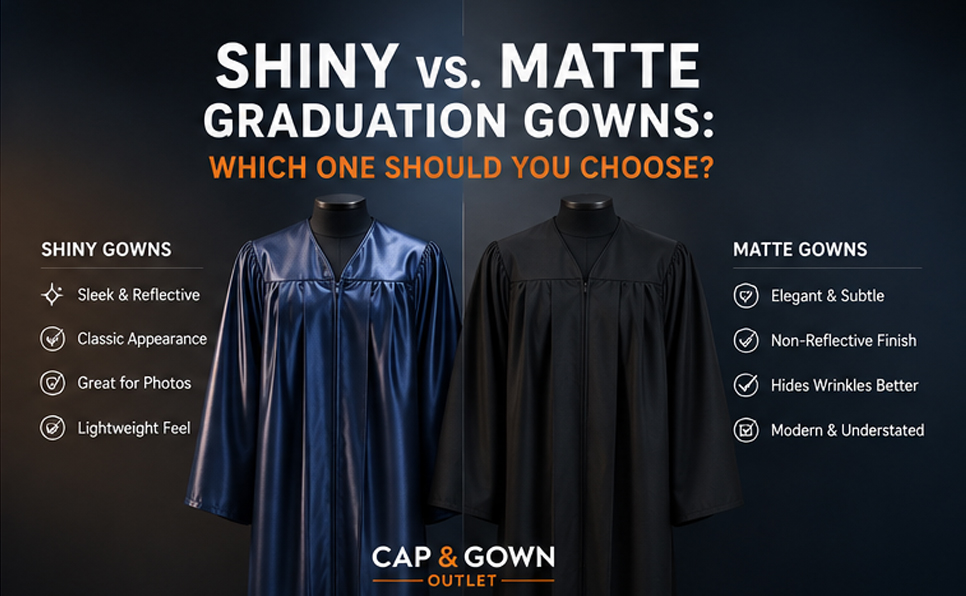
Standard gowns can be practical for non-degree recognition ceremonies when permitted by the program.
Before selecting a gown, compare:
- Style
- Material
- Finish
- Color
- Construction
- Size range
- Extended-size availability
- Individual-order availability
Choose a Gown That Can Support Future Needs
Recurring programs may benefit from selecting a standard gown that is expected to remain practical for future cohorts.
A consistent gown can simplify:
- Replacement orders
- Small supplemental purchases
- Inventory management
- Participant distribution
- Future ceremony planning
Current product availability should still be verified for every order.
Accurate Sizing Matters Even More for Small Orders
In a class of eight participants, one incorrect gown represents a significant portion of the order.
Use the current size chart for the exact gown selected.
A simple process can include:
- Select the gown
- Obtain its current sizing instructions
- Collect required participant information
- Assign the appropriate sizes
- Identify extended sizes
- Review the final size distribution before ordering
Do Not Guess From Everyday Clothing Sizes
Graduation gown sizing may use criteria different from everyday clothing.
Follow the sizing guidance associated with the selected product instead of assuming that a participant’s normal shirt, jacket or dress size corresponds to the gown.
Extended Sizes Should Be Part of Normal Ordering
Before selecting one gown for the program, verify that the available size range can accommodate expected participants.
Extended sizes should be identified during the regular sizing process rather than addressed only after the main order is placed.
Mortarboards for Small Groups
If the ceremony uses traditional graduation caps, verify whether mortarboards are sold individually, with gowns or as part of a package.
Determine:
- Cap color
- Cap style
- Fit or adjustability
- Required quantity
- Whether the tassel is included
Tassels for Recurring Small Ceremonies
Programs should determine whether tassels need a specific year charm or whether an undated style is appropriate.
Where program requirements permit, undated tassels may offer greater flexibility for organizations holding several ceremonies during the year.
Certificate Covers Can Be the Main Recognition Product
A small training program does not necessarily need a complete cap-and-gown package.
For certain certificate-based programs, a formal certificate presentation may better match the accomplishment.
Certificate covers may be considered for:
- Vocational training certificates
- Workforce program completion
- Skills-training recognition
- Adult education achievements
- Professional training
- Other approved completion documents
Measure Before Ordering Certificate Covers
Record:
- Document width
- Document height
- Portrait or landscape orientation
- Required cover dimensions
- Cover color
- Quantity
Do not assume that certificates issued by different programs have identical dimensions.
Use Recognition Cords According to Actual Eligibility
If only two participants qualify for a particular distinction, the organization may only need two cords.
Where the selected cord is available in small quantities, purchasing can follow the actual recognition requirement.
Maintain a written recognition key identifying:
- Cord color
- Recognition category
- Eligibility requirements
- Approving authority
There is no universal commercial cord color representing all government education or workforce programs.
Plain Stoles Can Work Well for Small Programs
Plain stoles can provide a coordinated recognition element without the production requirements associated with customized merchandise.
Programs should determine whether stoles are actually necessary and which participants are eligible to receive them.
Customization Changes the Small-Order Equation
A standard product available individually may have different ordering terms once customization is requested.
Customized merchandise may involve:
- Minimum quantities
- Setup requirements
- Artwork preparation
- Proof approval
- Production schedules
- Different pricing
Verify these requirements before assuming a custom item can be purchased under the same terms as a standard product.
Consider Standard Merchandise for Very Small Groups
For a program with only a few participants, standard merchandise can reduce unnecessary complexity.
Instead of creating a different custom product for every cohort, the organization may choose standard gowns and accessories while presenting program-specific information through the ceremony itself or through appropriately authorized recognition materials.
Government Branding Requires Permission
Government seals, agency logos, insignia and other protected artwork should only be reproduced when appropriate authorization exists.
A small quantity does not eliminate intellectual-property or agency-authorization requirements.
Degree Recipients Need Credential-Appropriate Regalia
Small-quantity ordering can also be useful when only a few participants are earning academic degrees, but degree requirements still control product selection.
Bachelor’s Regalia
Bachelor’s regalia commonly includes a bachelor’s gown, mortarboard and tassel, subject to the requirements of the degree-granting institution.
An academic hood should not automatically be added unless required or permitted.
Master’s Regalia
Master’s graduates generally use a degree-specific gown and commonly an academic hood according to institutional requirements.
Doctoral Regalia
Doctoral requirements may include a doctoral gown, academic hood and institution-approved doctoral headwear.
Do Not Choose Regalia Solely Because It Has No Minimum
Product availability should not override ceremony or academic requirements.
The appropriate product must first satisfy the organization’s specifications. Ordering flexibility should be evaluated after suitability has been established.
Check Storage Before Buying Extra Merchandise
Organizations sometimes purchase extra merchandise because they expect to use it eventually.
Before doing so, consider:
- Available storage space
- Inventory management
- Future program consistency
- Possible changes in gown specifications
- Year-specific merchandise
- Size distribution uncertainty
Count Existing Merchandise Before Every Order
A small program may already have enough usable inventory to satisfy part of its requirement.
Count:
- Gowns by size
- Extended-size gowns
- Mortarboards
- Tassels
- Certificate covers
- Stoles
- Recognition cords
Calculate the Net Requirement
Suppose a program has 10 participants and already has three appropriate gowns in the required sizes.
After inspecting those gowns, the new gown requirement may be seven rather than 10.
Repeat the calculation separately for every product.
Small-Quantity Ordering Can Reduce Obsolete Merchandise
Ordering closer to current demand can be particularly useful for merchandise that may become difficult to use later.
Examples include:
- Year-dated tassels
- Cohort-specific stoles
- Customized certificate covers
- Program-specific merchandise
- Products in uncommon sizes
But Small Orders Are Not Automatically the Lowest-Cost Strategy
Purchasing only a few items can reduce excess inventory, but it may not always produce the lowest unit cost.
Programs should compare:
- Unit price
- Quantity-based pricing where available
- Shipping
- Customization
- Expected future use
- Storage
- Risk of unused merchandise
Compare Total Delivered Cost
Shipping can represent a meaningful portion of a very small order.
Compare the complete delivered requirement rather than merchandise price alone.
Should Several Small Orders Be Combined?
For recurring legitimate requirements, an organization can evaluate whether consolidated purchasing is operationally appropriate and permitted by its procurement procedures.
However, a known larger government requirement should not be artificially divided into smaller transactions merely to avoid purchasing requirements or acquisition thresholds.
Known Requirements Should Be Planned as Known Requirements
If an organization knows that it requires 200 gowns for one defined procurement, the commercial availability of individual gowns does not transform that requirement into 200 unrelated one-gown purchases.
The responsible purchasing office should evaluate the actual requirement and apply the appropriate procurement process.
Build a Small-Cohort Ordering Calendar
Programs with multiple completion dates can maintain a simple annual calendar.
For each cohort, record:
- Expected completion date
- Estimated participants
- Final participant deadline
- Sizing deadline
- Purchase date
- Required arrival date
- Distribution date
- Ceremony date
Maintain a Small Inventory of Standard Products When Appropriate
Some recurring programs may determine that maintaining limited standard inventory is more efficient than ordering every item separately for each ceremony.
Possible standard inventory can include:
- Frequently used gown sizes
- Mortarboards
- Undated tassels
- Standard certificate covers
- Plain stoles
- Common recognition cords
Inventory decisions should reflect actual historical demand and organizational purchasing practices.
Track What Is Actually Used
After each ceremony, record:
- Participants expected
- Participants recognized
- Gown sizes used
- Size exchanges
- Late additions
- Supplemental orders
- Unused merchandise
- Remaining reusable inventory
This information can help determine whether future orders should be placed individually, in small groups or in larger planned quantities.
Government Procurement Rules Remain Separate From Product Minimums
A supplier’s commercial minimum quantity and a government organization’s purchasing authority are two different issues.
A product may be available as a single unit while the government purchaser must still comply with applicable federal, state, local or Tribal procurement procedures.
The responsible purchasing office should determine which purchasing method applies.
Federal Small Purchases
Federal acquisition procedures include rules for micro-purchases and simplified acquisitions. Authorized purchasers must follow applicable agency procedures, required-source rules and other acquisition requirements.
The availability of a graduation product in a small quantity does not by itself establish authority to purchase it.
Government Purchase Cards
Federal acquisition rules provide for the Governmentwide commercial purchase card to be used by appropriately designated personnel for authorized transactions.
The card can only be used for purchases otherwise authorized by applicable law and regulation.
Avoid Improperly Dividing Requirements
Government purchasers should not divide a known larger requirement into smaller purchases merely to avoid acquisition requirements or applicable purchasing thresholds.
No-minimum merchandise should be used to satisfy genuine small-quantity needs, not to restructure a known larger requirement artificially.
Purchase Orders
Some institutional purchases may involve purchase orders.
If a purchase order is intended, confirm that the supplier accepts POs for the proposed transaction and verify applicable payment terms before issuance.
PO acceptance should not be assumed simply because a product is available individually.
Verify Funding Before Charging Graduation Merchandise
Participation in a government-funded education or training program does not automatically establish that graduation merchandise is an allowable expense.
The responsible organization should review applicable laws, regulations, award terms, cost requirements, program guidance and agency policies before charging merchandise to a particular source of funds.
Small-Quantity Graduation Ordering Worksheet
Before purchasing, prepare a worksheet containing:
- Program
- Number of participants
- Product
- Required quantity
- Existing usable quantity
- Net quantity to purchase
- Size or specification
- Customization requirement
- Current product minimum
- Estimated shipping
- Required arrival date
Small-Program Purchasing Checklist
- Confirm the current participant count
- Identify the achievement being recognized
- Determine the appropriate ceremony format
- Select only necessary products
- Check existing inventory
- Calculate the net requirement
- Select the gown
- Use the current product-specific size chart
- Include extended sizes
- Select caps and tassels
- Measure certificates
- Determine stole and cord eligibility
- Verify individual or small-quantity product availability
- Verify minimums for customized products
- Compare standard and customized options
- Consider future legitimate requirements
- Compare total delivered cost
- Follow applicable procurement procedures
- Do not artificially divide known requirements
- Confirm PO acceptance when applicable
- Verify funding allowability
- Verify authorization for protected artwork
- Set a required arrival date
- Inspect merchandise promptly
- Record unused inventory
Flexible Graduation Supplies for Small Institutional Programs
Cap and Gown Outlet is an independent academic regalia supplier serving individual customers and qualifying institutional purchasers.
Depending on the specific product and current availability, organizations may be able to purchase smaller quantities of:
- Graduation gowns
- Mortarboard caps
- Graduation tassels
- Cap, gown and tassel packages
- Certificate covers
- Diploma covers
- Plain graduation stoles
- Honor and recognition cords
- Bachelor’s regalia
- Master’s regalia
- Doctoral regalia
- Academic hoods when applicable
- Related graduation accessories
Some standard merchandise may be available without a large minimum quantity. Minimums and ordering requirements can differ for customized, special-order and other selected products and should be verified before purchasing.
Institutional Quotes for Small Orders
Government education programs, public training organizations, workforce programs, vocational programs, GED programs and other qualifying institutional purchasers can inquire about merchandise based on their actual requirements.
A useful inquiry can include:
- Products required
- Quantities
- Gown sizes
- Extended sizes
- Colors
- Certificate-cover dimensions
- Customization requirements
- Delivery destination
- Required arrival date
Formal quotations and institutional pricing can be requested where applicable. Product availability, pricing, minimum quantities and customization requirements depend on the merchandise selected.
Nationwide U.S. shipping is available. Purchasers should verify current inventory, processing requirements, shipping costs and expedited options for the specific order.
Independent Supplier and Non-Affiliation Disclosure
Cap and Gown Outlet is an independent academic regalia supplier. It is not affiliated with, endorsed by, sponsored by, authorized by or acting on behalf of any federal, state, local or Tribal government, government agency, public institution or government-funded program unless an actual official relationship has been established.
References to government education, workforce programs, vocational education, GED programs, correctional education and public-sector training are descriptive. They do not establish government endorsement, approved-vendor status, contract status, preferred-supplier designation, funding eligibility or authorization to reproduce government seals, logos or protected marks.
Frequently Asked Questions
Can a small public program order graduation gowns without buying a large case?
Some standard products may be available individually or in small quantities. The ordering requirements for the exact product should be verified before purchase.
Is no-minimum ordering available for every graduation product?
No. Minimum quantities can vary. Customized and special-order merchandise in particular may have different requirements.
Can a program order seven gowns if it has seven graduates?
If the selected gowns are available in that quantity, the organization can evaluate an order based on its seven-person requirement rather than automatically increasing the quantity solely to create a larger order.
Can a program buy one replacement graduation gown?
When the same standard Bachelors gown is available individually, a replacement may be purchased in the required quantity, subject to current availability and applicable purchasing procedures.
Are small quantities useful for programs with several graduation dates?
They can be. Programs with staggered completion dates can compare periodic small orders with maintaining a planned inventory of standard merchandise.
Is buying a few gowns always cheaper than bulk ordering?
No. Small orders can reduce unused inventory, while larger orders may have different pricing and shipping economics. Compare the total delivered requirement and expected future use.
Can government programs request quotes for small graduation orders?
Qualifying institutional purchasers can request information or quotations based on their actual requirements, subject to applicable supplier terms.
Does a product having no minimum mean a government buyer can automatically purchase it?
No. Commercial ordering terms do not replace government procurement rules. The purchasing organization must follow its applicable procedures and authority.
Can a known large government requirement be divided into many small orders?
Government purchasers should not artificially divide a known larger requirement merely to avoid applicable procurement requirements or acquisition thresholds.
Are graduation supplies automatically covered by government education funding?
No. The responsible organization should verify whether the proposed purchase is allowable under its specific funding source and applicable requirements.
Flexible Ordering for Programs of Every Size
A professional recognition ceremony does not require a large graduating class. Small public-sector education and training programs can begin with their actual participant count, select the merchandise appropriate to the achievement and determine whether suitable products are available in the quantities needed.
By combining accurate sizing, product-level quantities, existing inventory and responsible purchasing practices, organizations can use small-quantity graduation caps and gowns for government programs to support smaller cohorts without automatically accumulating unnecessary graduation merchandise.