Graduation and completion ceremonies can recognize meaningful educational achievements without requiring an elaborate merchandise package. Public education organizations, government-supported training programs and institutional purchasers can build professional recognition ceremonies by identifying essential products first and controlling optional costs.
Budget-friendly graduation regalia for public education programs may include standard graduation gowns, mortarboard caps, tassels, certificate covers, diploma covers, recognition cords and approved stoles.
The most useful measure of affordability is not always the advertised price of one Doctoral gown. Institutional purchasers should consider the complete cost of outfitting each participant, shipping the order and preparing the merchandise for the ceremony.
Which Programs May Need Graduation and Recognition Supplies?
Graduation merchandise may be considered by qualifying organizations conducting education, training or completion ceremonies, depending on their individual program requirements.
Examples may include:
- Adult education programs
- GED and high school equivalency programs
- Career and technical education programs
- Vocational education programs
- Public workforce training programs
- Job-readiness programs
- Apprenticeship and skills-training programs
- State-operated education programs
- Public high schools
- Community education programs
- Correctional education programs
- Reentry education and training programs
- Government employee training programs
- Publicly supported career-development programs
- Other qualifying education and training organizations
Build the Ceremony Budget Before Choosing Products
Institutional buyers can begin with a simple question: what does each participant actually need?
Divide possible products into three groups:
- Essential ceremony products
- Achievement-specific products
- Optional commemorative products
This prevents optional accessories from becoming automatic purchases for every participant.
Essential Graduation Products
For a traditional cap-and-gown ceremony, the essential package may be relatively simple:
- Graduation gown
- Mortarboard
- Tassel
Programs can then determine whether certificate covers, stoles, cords or other products are necessary.
Calculate Cost Per Participant
For institutional planning, calculate the estimated merchandise cost for one participant before multiplying it across the entire graduating group.
The calculation may include:
- Gown
- Cap
- Tassel
- Certificate cover
- Approved stole
- Approved cord
- Customization
- Allocated shipping cost
This provides a clearer budget picture than comparing gown prices alone.
Create More Than One Package Level
Programs can evaluate different merchandise configurations before approving the final order.
Basic Recognition Package
- Graduation gown
- Mortarboard
- Tassel
Certificate Recognition Package
- Certificate
- Certificate cover
- Approved recognition cord when applicable
Expanded Graduation Package
- Graduation gown
- Mortarboard
- Tassel
- Certificate cover
- Approved stole or cord
The organization can select the package that best matches the achievement, ceremony and authorized budget.
Not Every Ceremony Requires a Cap and Gown
A formal certificate presentation can be an appropriate alternative for certain training or completion programs.
This may be especially useful when participants are receiving vocational, workforce or professional training certificates rather than academic degrees.
The recognition format should accurately describe the achievement.
Use Standard Graduation Gowns When Appropriate
Programs that choose traditional graduation apparel can often simplify the order by selecting one approved standard gown for compatible participant groups.
Compare gowns according to:
- Material
- Construction
- Color
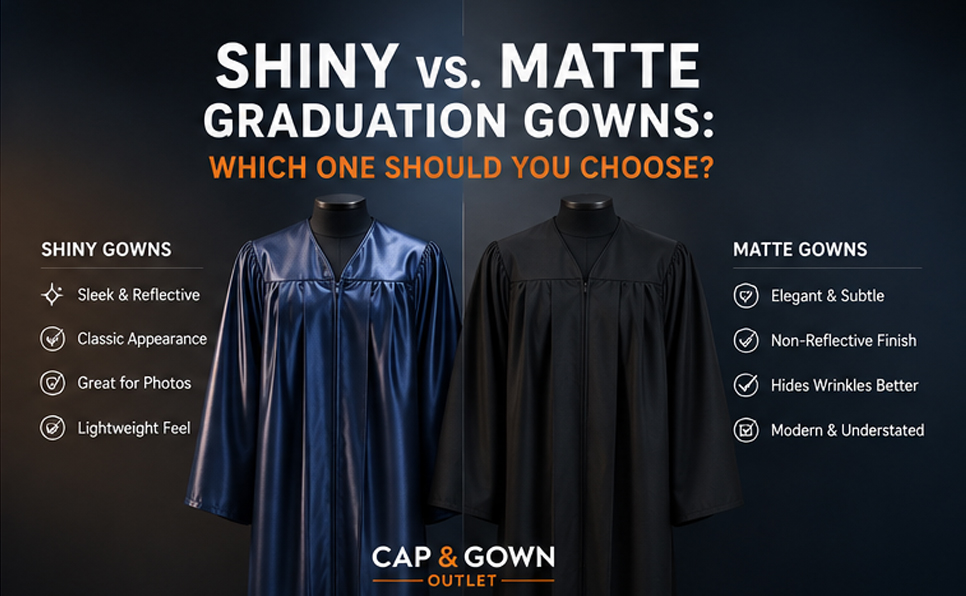
- Finish
- Available sizes
- Extended sizes
- Package options
- Bulk availability
Avoid Unnecessary Gown Variations
Using several gown colors or styles can create additional inventory and distribution complexity.
When program requirements permit, one consistent gown can make it easier to manage current and future ceremonies.
Separate Academic Regalia From General Training Regalia
A standard graduation gown for a workforce or training ceremony should not automatically replace academic regalia required by a degree-granting institution.
Students earning academic degrees should follow the specifications established by their college, university or other degree-granting institution.
Bachelor’s, Master’s and Doctoral Regalia
Academic degree recipients can require different apparel.
Bachelor’s Regalia
A bachelor’s package commonly includes a bachelor’s gown, mortarboard and tassel, subject to institutional requirements.
Master’s Regalia
A master’s package generally uses a master’s gown and commonly includes an academic hood according to institutional requirements.
Doctoral Regalia
Doctoral requirements may include a doctoral gown, academic hood and approved doctoral headwear.
Degree-specific requirements should be verified before purchasing.
Do Not Purchase Academic Hoods for Every Training Program
Academic hoods are associated with academic credentials and institutional requirements.
A vocational or workforce training program should not add academic hoods merely to make a ceremony appear more formal.
Certificate Covers Can Deliver High Recognition Value
Certificate covers can provide a formal presentation while keeping the recognition centered on the credential or completion document.
They may be useful for:
- Adult education completion
- Career training
- Vocational education
- Skills training
- Workforce programs
- Apprenticeship recognition
- Professional development
- Other certificate-based programs
Verify Certificate Size Before Purchasing
Measure the actual document rather than assuming a standard cover will fit.
Record:
- Certificate width
- Certificate height
- Orientation
- Required cover size
- Cover color
- Quantity
Use Recognition Cords Strategically
Recognition cords can distinguish accomplishments without requiring separate gown styles for each participant group.
An organization can establish its own internal recognition system documenting:
- Cord color
- Achievement represented
- Eligibility requirements
- Approving authority
Commercial cord colors should not be described as having universal government or public-program meanings.
Decide Whether Graduation Stoles Are Necessary
Stoles can add visual recognition but should not automatically be included in every package.
Ask whether a stole serves a defined purpose such as:
- Program identification
- Leadership recognition
- Academic achievement
- Training completion
- Another organization-approved distinction
Plain Stoles Can Reduce Complexity
When an approved stole is needed but customization is unnecessary, a plain stole can avoid artwork preparation, proofing and custom production requirements.
Customize Only When It Adds Meaningful Value
Custom merchandise may involve additional design, setup, approval and production steps.
Before customizing, determine whether the wording or artwork provides a meaningful ceremony benefit.
Government Seals and Logos Require Authorization
Federal, state, local and Tribal government seals, agency logos and other protected marks should only be reproduced when appropriate authorization exists.
A supplier’s ability to print or embroider artwork does not itself establish permission to use it.
Use Undated Merchandise for Greater Flexibility
Recurring programs can consider undated products when ceremony requirements permit.
Examples may include:
- Standard gowns
- Mortarboards
- Undated tassels
- Plain stoles
- Standard certificate covers
- Reusable accessories where appropriate
Unused standard merchandise may be easier to incorporate into future ceremonies than products displaying a specific year.
Count Existing Inventory Before Requesting Quotes
An organization should not purchase products it already has in usable condition.
Before preparing the next order, count:
- Gowns by size
- Extended-size gowns
- Mortarboards
- Tassels
- Certificate covers
- Diploma covers
- Stoles
- Recognition cords
- Other reusable supplies
Create an Inventory Credit Against the New Requirement
If 200 gowns are needed but 35 appropriate gowns are already available, the preliminary purchase requirement may be reduced accordingly after condition and size availability are verified.
Apply the same process separately to each product.
Track Inventory by Size
A total gown count is not enough.
Inventory should identify how many usable gowns are available within each applicable size range.
Use Accurate Sizing to Reduce Exchanges
Incorrect sizing can create avoidable replacement orders and administrative work.
Use the size chart for the exact gown being purchased.
A centralized process may include:
- Selecting the gown
- Obtaining its current size chart
- Setting a participant sizing deadline
- Collecting required information
- Assigning sizes
- Reviewing incomplete submissions
- Calculating quantities by size
Plan Extended Sizes From the Beginning
Before choosing one Bachelors gown for a large group, verify that the product’s size range can accommodate expected participants.
Extended sizes should be included in the original order rather than treated as an emergency purchase later.
Calculate Every Product Separately
A ceremony with 500 participants does not necessarily require 500 units of every product.
For example, the approved requirement might include:
- 420 gowns
- 420 mortarboards
- 420 tassels
- 500 certificate covers
- 100 recognition cords
- 75 approved stoles
The organization should calculate actual quantities from its ceremony plan.
Create a Cost-Control Worksheet
A useful purchasing worksheet can include:
- Product
- Required quantity
- Existing usable inventory
- Quantity to purchase
- Estimated unit price
- Estimated product total
- Customization cost
- Estimated freight
- Estimated delivered total
Compare the Delivered Cost Per Participant
After the complete order is estimated, organizations can calculate an approximate delivered merchandise cost per participant.
This can make alternative ceremony packages easier to compare.
Request Comparable Institutional Quotes
Suppliers should receive substantially the same specifications when their pricing will be compared.
Provide:
- Gown specifications
- Gown quantities by size
- Extended-size quantities
- Mortarboard specifications
- Tassel requirements
- Certificate-cover dimensions
- Stole requirements
- Cord requirements
- Customization details
- Packaging requirements
- Delivery destination
- Required arrival date
Ask for Line-Item Pricing
Instead of requesting only one total price, ask for separate pricing where applicable for:
- Gowns
- Mortarboards
- Tassels
- Graduation packages
- Certificate covers
- Diploma covers
- Stoles
- Recognition cords
- Customization
- Freight
Compare Like With Like
Two gowns offered at different prices may not have the same construction, finish, size range or package contents.
Before identifying one quotation as less expensive, confirm that the products satisfy the same requirement.
Calculate Total Delivered Cost
The total institutional requirement can include:
- Merchandise
- Customization
- Setup charges
- Packaging
- Shipping
- Multiple-destination freight
Comparing total delivered cost can provide a more useful budget picture than comparing a single unit price.
Centralize Compatible Orders Where Practical
Organizations operating multiple programs or locations can review whether compatible requirements can be coordinated through one purchasing process when their procurement rules permit.
Central coordination can also help standardize:
- Product specifications
- Size collection
- Recognition standards
- Inventory records
- Ordering schedules
Maintain Location-Level Allocation
Even when purchasing is centralized, maintain separate quantities for each delivery or distribution location.
Record:
- Location
- Program
- Participant count
- Gowns by size
- Caps
- Tassels
- Certificate covers
- Stoles
- Cords
- Required arrival date
Budget for a Reasonable Quantity of Backup Merchandise
An institutional order may need limited backup inventory for approved size exchanges, verified late additions or other legitimate needs.
Backup quantities should be based on program experience and purchasing requirements rather than an arbitrary percentage.
Use Historical Data to Improve Future Budgets
After each ceremony, record:
- Projected participants
- Actual participants
- Size distribution
- Extended-size usage
- Exchanges
- Late additions
- Supplemental orders
- Unused merchandise
- Remaining reusable inventory
This information can make future forecasts more accurate.
Public-Sector Purchasing Requirements
Government agencies and publicly funded organizations should follow the procurement rules applicable to their jurisdiction, agency, funding source and transaction.
Depending on the circumstances, purchasing may involve:
- Authorized purchasing cards
- Direct purchases where permitted
- Price quotations
- Requests for quotation
- Purchase orders
- Competitive solicitations
- Existing contracts
- Required purchasing sources
- Other authorized methods
The responsible purchasing office should determine the process applicable to the specific purchase.
Federal Purchasing Rules Require More Than Checking a Dollar Amount
Federal purchasing procedures include acquisition thresholds, but a purchase falling below a particular threshold does not automatically mean an agency may purchase from any supplier.
Required sources, existing contracts, competition requirements, agency procedures and other acquisition rules can still apply.
Purchase Orders Should Be Confirmed in Advance
If an institutional purchaser intends to issue a purchase order, supplier PO acceptance and applicable payment terms should be confirmed before issuance.
Accepting a PO does not itself establish government approval, contract status or preferred-vendor designation.
Verify Funding Allowability Before Purchasing
The fact that an education or training program receives government funding does not automatically establish that graduation gowns, stoles, cords or other ceremony products are allowable expenses under that funding source.
The responsible organization should verify applicable program requirements, award terms, cost requirements, agency policies and other governing rules before charging graduation merchandise to program funds.
Avoid Unsupported Government Supplier Claims
A supplier should not describe itself as government approved, federally approved, state approved, an official agency supplier or an authorized government contractor unless the applicable status has actually been established.
Ordering Early Can Protect the Budget
Early planning provides more time to finalize participant counts, obtain sizes, review inventory, request quotations and complete required purchasing approvals.
It can also reduce dependence on last-minute fulfillment options.
Set an Arrival Date Before the Ceremony
The required delivery date should provide sufficient time for:
- Receiving
- Inspection
- Sorting
- Participant distribution
- Fit verification
- Approved corrections
Inspect the Shipment Promptly
Verify:
- Carton count
- Gown quantities
- Sizes
- Extended sizes
- Mortarboards
- Tassels
- Certificate covers
- Diploma covers
- Stoles
- Cords
- Customized products
- Visible shipping damage
Budget-Friendly Graduation Purchasing Checklist
- Define the achievement being recognized
- Select the appropriate ceremony format
- Identify essential products
- Separate optional products
- Create alternative package levels
- Standardize compatible gowns where appropriate
- Consider undated merchandise
- Count existing inventory
- Subtract usable inventory from the requirement
- Obtain the current gown size chart
- Collect accurate sizes
- Include extended sizes
- Calculate every product separately
- Determine whether customization is necessary
- Verify authorization for protected artwork
- Create a cost-control worksheet
- Request comparable quotations
- Request line-item pricing
- Compare equivalent merchandise
- Calculate total delivered cost
- Estimate delivered cost per participant
- Follow applicable procurement procedures
- Verify funding allowability
- Confirm PO acceptance when applicable
- Establish the required arrival date
- Inspect delivered merchandise
- Track remaining inventory
- Use historical information for future budgets
Graduation Supplies for Cost-Conscious Institutional Programs
Cap and Gown Outlet is an independent academic regalia supplier serving individual customers and qualifying institutional purchasers.
Depending on program requirements and product availability, organizations may consider:
- Standard graduation gowns
- Mortarboard caps
- Graduation tassels
- Cap, gown and tassel packages
- Certificate covers
- Diploma covers
- Plain graduation stoles
- Customized stoles where available and appropriately authorized
- Honor and recognition cords
- Bachelor’s regalia
- Master’s regalia
- Doctoral regalia
- Academic hoods when applicable
- Related graduation accessories
Institutional and Bulk Graduation Orders
Public education programs, government organizations, GED programs, workforce programs, vocational education programs, training providers and other qualifying institutional purchasers can inquire about bulk graduation merchandise based on their defined requirements.
Formal quotations and quantity-based institutional pricing can be requested for specified merchandise. Product availability, sizes, extended sizes, colors, customization options and applicable minimum quantities depend on the products selected.
Nationwide U.S. shipping is available. Institutional purchasers should provide the actual delivery destination and verify current inventory, processing requirements, customization timelines and expedited options for their specific order.
Organizations intending to purchase using a purchase order should confirm PO acceptance and applicable payment terms before issuing the PO.
Independent Supplier and Non-Affiliation Disclosure
Cap and Gown Outlet is an independent academic regalia supplier. It is not affiliated with, endorsed by, sponsored by, authorized by or acting on behalf of any federal, state, local or Tribal government, government agency, public education program or publicly funded organization unless an actual official relationship has been established.
References to government education, public education, workforce programs, GED programs, vocational education and other publicly supported training programs are descriptive. They do not establish government endorsement, approved-vendor status, preferred-supplier designation, contract status, funding eligibility or authorization to reproduce government seals, logos or protected marks.
Frequently Asked Questions
What is the most affordable graduation package for a public education program?
The appropriate package depends on the ceremony. When traditional graduation apparel is required, a basic Masters gown, mortarboard and tassel package may provide a simple starting point. Some certificate-based programs may not require full graduation apparel.
How should institutional buyers compare graduation gown prices?
Compare products with equivalent specifications and consider the complete delivered requirement, including accessories, customization and freight.
Can existing gowns be reused?
If institutional policy permits reuse and the merchandise remains appropriate and serviceable, existing inventory can be considered before purchasing additional products.
Are undated tassels useful for recurring programs?
They may provide greater inventory flexibility when the program does not require year-specific tassels.
Can certificate covers replace caps and gowns?
For some certificate-based recognition events, a formal certificate presentation may be appropriate without full graduation apparel. The responsible organization should determine the ceremony format.
Should every graduate receive a stole and cord?
Not necessarily. Organizations can establish eligibility requirements and provide recognition accessories only to participants who qualify for the defined distinction.
Can government programs request bulk pricing?
Qualifying institutional purchasers can request quotations based on their specified products, quantities, sizes, customization and delivery requirements, subject to availability and applicable terms.
Can a public agency purchase with a PO?
The agency should follow its applicable procurement procedures, and supplier PO acceptance and payment terms should be confirmed before the purchase order is issued.
Are graduation products automatically allowable under government education grants?
No. The responsible organization should verify the requirements of the particular funding source before charging graduation merchandise to program funds.
Does an affordable graduation supplier automatically qualify as a government vendor?
No. Pricing or the ability to fulfill an institutional order does not itself establish government approval, contract status or preferred-vendor designation.
Better Planning Creates a More Cost-Efficient Ceremony
Cost-conscious graduation purchasing begins with identifying the achievement, determining essential products and calculating the complete requirement. Standard merchandise, accurate sizing, existing inventory, selective accessories and clear supplier specifications can all help organizations manage ceremony costs.
By evaluating the delivered cost per participant instead of focusing exclusively on the advertised price of one product, institutional purchasers can make more informed decisions about budget-friendly graduation regalia for public education programs while maintaining an organized and professional recognition experience.