Commencement is one of the most visible events on a college or university calendar. Graduates celebrate academic achievements, faculty members participate in ceremonial processions, and institutional leaders represent the university’s traditions.
Behind these celebrations is a substantial planning operation. Universities may need to coordinate academic gowns, mortarboards, doctoral tams, master’s hoods, faculty regalia, tassels, and other approved ceremonial accessories across multiple academic departments and campuses.
Managing university commencement regalia purchasing effectively requires more than choosing a supplier. Institutions must establish academic dress specifications, develop purchasing policies, manage student costs, forecast participation, and coordinate product delivery.
This guide explains how higher education institutions can design a practical graduation apparel purchasing program that supports academic accuracy, affordability, supplier accountability, and reliable commencement preparation.
Why Universities Need a Coordinated Regalia Purchasing Strategy
Graduation apparel purchasing often involves several institutional departments.
The commencement office may establish ceremony requirements, the registrar may verify academic credentials, graduate schools may confirm hood specifications, and purchasing departments may manage supplier agreements.
Without coordination, different departments may use inconsistent specifications or purchasing arrangements.
Core Goals of an Institutional Regalia Program
- Maintain accurate academic dress requirements.
- Provide consistent approved apparel across participating groups.
- Offer clear purchasing information to students and faculty.
- Evaluate complete costs rather than advertised prices alone.
- Coordinate institutional purchasing and payment requirements.
- Manage inventory, delivery, and distribution.
- Reduce avoidable last-minute problems.
- Document lessons for future commencement ceremonies.
1. Centralized vs. Department-Based Graduation Regalia Purchasing
One of the first decisions is determining who will manage academic regalia purchasing.
Centralized University Purchasing
A central office coordinates approved products, supplier evaluation, purchasing procedures, and delivery arrangements.
This approach may help institutions maintain consistent specifications and purchasing records.
Department-Based Purchasing
Individual colleges, graduate schools, or academic departments manage regalia for their participants.
This model may provide flexibility when different programs have specialized requirements.
Hybrid Purchasing
A hybrid system uses centralized supplier or purchasing oversight while allowing academic departments to confirm degree-specific specifications.
This arrangement may be useful for universities with several schools or professional programs.
Purchasing Model Comparison
| Model | Potential Advantage | Important Consideration |
|---|---|---|
| Centralized | Consistent purchasing oversight | Requires coordination across departments |
| Department-Based | Program-specific flexibility | May create inconsistent processes |
| Hybrid | Shared oversight with academic input | Requires clear division of responsibilities |
2. Create a University Academic Regalia Policy
Institutions should document which academic garments are approved for each participant group.
Academic dress conventions can provide useful guidance, but individual universities may maintain their own traditions and specifications.
What an Academic Regalia Policy Should Address
- Approved gown styles by degree level
- Official gown colors and fabric requirements
- Academic hood specifications
- Doctoral gown requirements
- Approved headwear
- Tassel requirements
- Faculty academic dress
- Honorary degree recipient attire
- Approved stoles and recognition accessories
- Accessibility and additional-fit accommodations
The institution should identify which office has authority to approve exceptions or changes.
3. Understand Academic Dress Differences Across Degree Levels
Academic regalia varies by credential and institutional policy.
Procurement teams should not assume one graduation package is suitable for every graduate.
Associate Degree Regalia
Community colleges and other institutions awarding associate degrees may specify gowns, mortarboards, and tassels according to their commencement policies.
Bachelor’s Degree Regalia
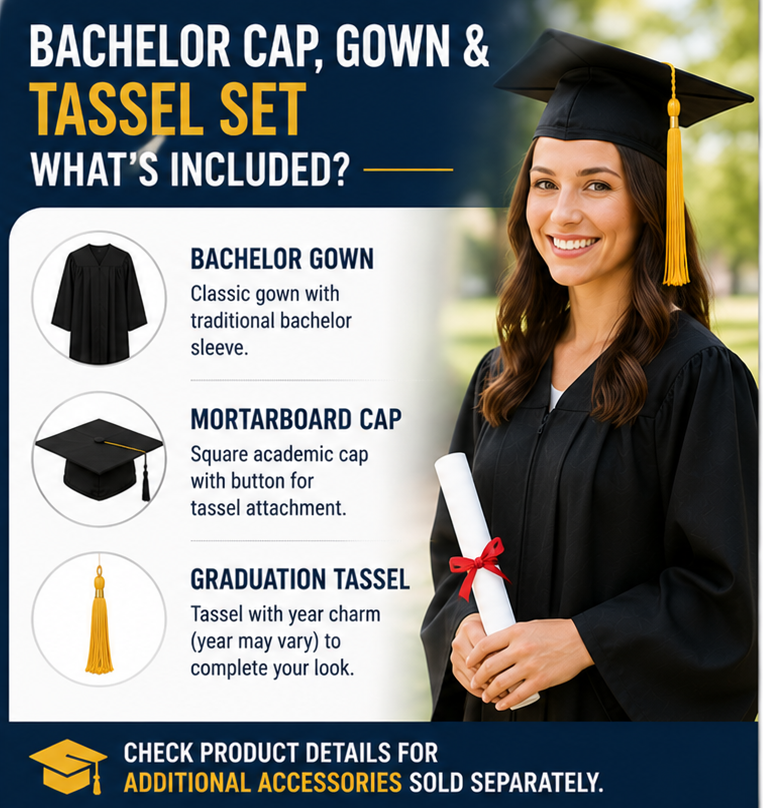
Bachelor’s graduates commonly wear gowns and mortarboards. Sleeve construction and other details may reflect established academic dress conventions.
Academic hoods are not universally required for bachelor’s degree recipients.
Master’s Degree Regalia
Master’s academic dress often includes a distinctive gown and academic hood.
Institutions should verify the correct hood specifications for each approved degree.
Doctoral Degree Regalia
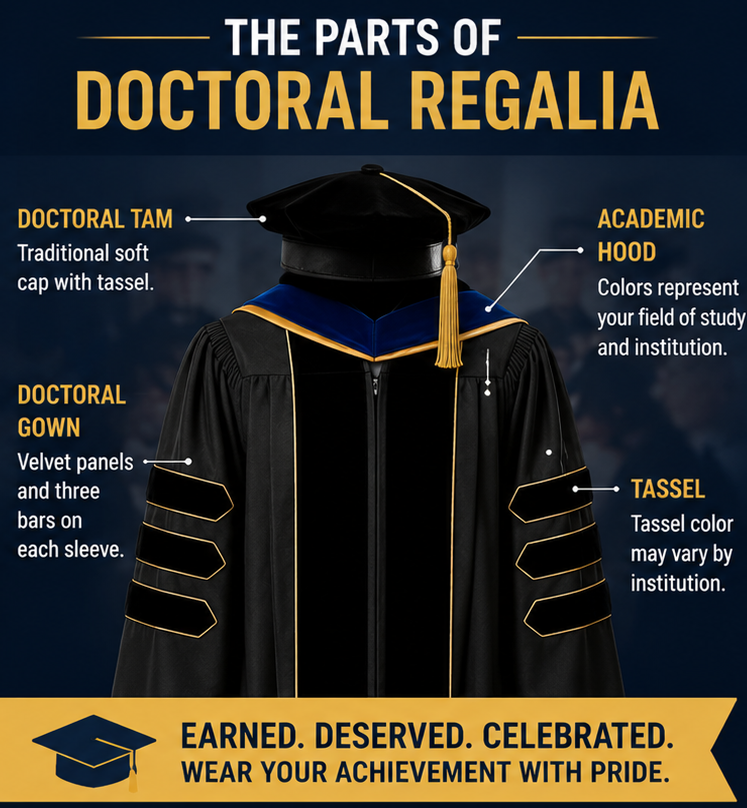
Doctoral apparel may include specialized gowns, velvet trim, academic hoods, and approved headwear such as doctoral tams.
Some universities use institution-specific doctoral designs.
Faculty Academic Regalia
Faculty academic dress often reflects the wearer’s earned degree and degree-granting institution, subject to the host university’s requirements.
Specialized faculty orders may need additional time for specification review and customization.
4. Build an Academic Regalia Specification Matrix
Universities can reduce purchasing errors by documenting regalia requirements in a standardized matrix.
| Participant Group | Gown Requirement | Hood Requirement | Headwear |
|---|---|---|---|
| Associate Graduates | Institution-approved style | If required by institution | Approved cap |
| Bachelor’s Graduates | Bachelor’s style | If required by institution | Approved mortarboard |
| Master’s Graduates | Master’s style | Degree-appropriate hood, if required | Approved headwear |
| Doctoral Graduates | Doctoral style | Approved doctoral hood | Approved tam or mortarboard |
| Faculty | Degree-appropriate gown | As required | Approved academic headwear |
Each institution should replace these general descriptions with its official specifications.
5. Establish an Academic Hood Verification Process
Academic hoods are among the most specification-sensitive components of graduation regalia.
Depending on the academic dress system, a hood may incorporate design elements associated with the degree, discipline, or degree-granting institution.
However, universities may have their own rules.
Academic Hood Verification Checklist
- Confirm the degree awarded.
- Identify the authorized academic dress standard.
- Verify hood style and dimensions.
- Confirm approved lining colors.
- Verify trim requirements.
- Review any institution-specific design.
- Obtain academic department approval where required.
Procurement teams should not select hood colors solely from a generic chart or assume that similar degree names require identical hoods.
6. Separate Student Regalia Purchasing From Faculty Regalia Purchasing
Student and faculty apparel programs often have different priorities.
Student purchasing may emphasize affordability, standardized specifications, and large quantities.
Faculty purchasing may involve specialized academic dress, customization, and repeated use.
Student Regalia Priorities
- Approved degree-level attire
- Clear purchasing instructions
- Accurate sizing
- Transparent package contents
- Affordable options where available
- Reliable delivery before commencement
Faculty Regalia Priorities
- Accurate academic credentials
- Degree-granting institution requirements
- Appropriate hood specifications
- Gown construction and comfort
- Long-term care requirements
- Purchase versus rental economics
7. Evaluate Student-Paid, Institution-Funded, and Rental Programs
Universities may use several financial arrangements for graduation apparel.
Student-Paid Purchasing
Graduates purchase approved regalia through an institutional program or another permitted arrangement.
Institutions should communicate mandatory costs and ordering deadlines clearly.
Institution-Funded Purchasing
Institutions may purchase apparel for selected participants, departments, or programs using authorized funds.
Rental Programs
Some universities arrange regalia rentals for students, faculty, or ceremonial participants.
Rental programs require procedures for deposits, pickup, returns, cleaning, and replacement.
University-Owned Reusable Inventory
Institutions may maintain an inventory of selected academic gowns for repeated use.
Reusable inventory requires storage, cleaning, condition tracking, and periodic replacement.
8. Make Graduation Regalia Costs More Transparent for Students
Students may face several graduation-related expenses, including academic apparel, travel, photography, and other ceremony costs.
Universities should communicate required regalia expenses clearly and distinguish mandatory items from optional accessories.
Student Cost Transparency Checklist
- List required apparel components.
- Identify optional accessories.
- Explain approved purchasing arrangements.
- Provide ordering deadlines.
- Disclose known shipping or handling charges.
- Explain rental return requirements, if applicable.
- Provide a contact for sizing and ordering questions.
Institutions may also review whether existing approved apparel, rental options, or assistance programs can reduce barriers for eligible students.
9. Evaluate the Total Cost of Institutional Graduation Regalia
Universities should compare complete program costs rather than relying only on individual gown prices.
Academic regalia expenses may include specialized hoods, headwear, customization, shipping, and inventory management.
Illustrative Supplier Comparison
| Cost Category | Supplier A | Supplier B |
|---|---|---|
| 500 Standard Regalia Packages | $13,000 | $13,500 |
| Required Additional Accessories | $900 | $500 |
| Shipping | $650 | $350 |
| Total Before Applicable Taxes | $14,550 | $14,350 |
| Average Cost per Package | $29.10 | $28.70 |
These are hypothetical examples and do not represent actual supplier quotations.
In this example, Supplier B has the lower total delivered cost despite a higher initial package price.
Institutions should also evaluate academic dress accuracy, quality, availability, and purchasing terms.
10. Use a Weighted Supplier Evaluation Framework
Universities may benefit from a structured process for evaluating graduation regalia suppliers.
Illustrative Vendor Evaluation Criteria
| Evaluation Category | Example Weight |
|---|---|
| Academic Dress Accuracy | 30% |
| Total Delivered Cost | 25% |
| Fulfillment and Delivery Capability | 20% |
| Size Range and Product Availability | 15% |
| Service and Purchasing Terms | 10% |
| Total | 100% |
These weights are illustrative and should be adapted to institutional needs.
Public institutions must follow applicable procurement rules and required evaluation procedures.
11. Develop a Multi-Year Graduation Regalia Purchasing Strategy
Some institutions purchase graduation apparel annually without reviewing whether a longer-term strategy would improve operations.
A multi-year approach may help universities evaluate purchasing consistency, supplier performance, inventory needs, and administrative workload.
Questions for Multi-Year Planning
- Will gown styles and colors remain consistent?
- How frequently do academic programs change?
- Are student participation levels stable?
- Would reusable inventory be practical?
- Are faculty regalia needs predictable?
- What purchasing agreements are permitted?
- How should supplier performance be evaluated?
Any multi-year agreement should comply with applicable procurement rules and institutional policies.
12. Forecast Commencement Regalia Demand
Graduation regalia demand should be based on expected ceremony participation and the number of participants requiring apparel through the purchasing program.
Total student enrollment is not an appropriate substitute for confirmed commencement demand.
Illustrative University Demand Forecast
| Participant Category | Expected Participants | Requiring New Regalia |
|---|---|---|
| Bachelor’s Graduates | 1,400 | 1,150 |
| Master’s Graduates | 500 | 360 |
| Doctoral Graduates | 110 | 75 |
| Faculty Participants | 180 | 25 |
| Total | 2,190 | 1,610 |
These figures are hypothetical.
The difference between expected participants and new regalia demand may reflect approved existing apparel, rental arrangements, or other permitted purchasing methods.
13. Coordinate Graduation Regalia Sizes Across Departments
University regalia orders may involve several gown styles and sizing systems.
Institutions should use the selected manufacturer’s size chart for each relevant product.
Recommended Data Fields
- Participant identifier
- Academic department
- Degree level
- Height
- Additional required measurements
- Assigned gown size
- Approved gown color
- Academic hood specification
- Headwear size, if applicable
- Order status
Only necessary information should be collected, and access should be limited according to institutional privacy policies.
14. Plan for Specialized Doctoral and Faculty Regalia
Doctoral and faculty regalia may involve specialized construction, institutional colors, or customization.
Universities should identify these requirements earlier than standard student apparel when additional production time may be necessary.
Specialized Regalia Planning Checklist
- Verify academic degree and institution.
- Confirm the required gown design.
- Approve hood specifications.
- Confirm headwear requirements.
- Collect accurate measurements.
- Review customization details.
- Verify supplier production estimates.
- Allow time for product inspection.
15. Coordinate Regalia Purchasing With Campus Bookstores
Campus bookstores may play an important role in university commencement apparel programs.
Depending on the institution, bookstores may manage approved product listings, student payments, supplier relationships, pickup arrangements, or inventory.
Questions to Resolve
- Who approves regalia specifications?
- Who manages supplier selection?
- Who receives student payments?
- Who verifies academic hood requirements?
- Who manages order discrepancies?
- Who handles returns and exchanges?
- Who owns unsold inventory?
Universities should clarify these responsibilities before implementing a purchasing program.
16. Manage Multi-Campus Commencement Logistics
Universities with multiple campuses or regional commencement ceremonies may require separate regalia delivery plans.
A centralized purchasing agreement does not eliminate the need for location-specific logistics.
Multi-Campus Logistics Checklist
- Confirm each campus commencement date.
- Prepare campus-specific participant counts.
- Verify academic program requirements.
- Identify authorized receiving locations.
- Coordinate shipment tracking.
- Assign receiving staff.
- Maintain separate inventory records.
- Establish distribution schedules.
17. Evaluate Sustainable Graduation Apparel Options
Some colleges and universities include sustainability considerations in purchasing decisions.
Potential areas of evaluation include product durability, reusable inventory, packaging, and materials.
Sustainability Questions to Ask Suppliers
- What materials are used?
- Is recycled content documented?
- Are relevant environmental claims independently substantiated?
- Can the apparel be reused?
- What care requirements apply?
- How is the product packaged?
- What happens to unsold or retired inventory?
Institutions should request evidence for sustainability claims rather than relying on unverified marketing descriptions.
18. Create a Commencement Regalia Risk Management Plan
Large institutional apparel programs can encounter supply, sizing, shipping, and administrative problems.
A risk management plan helps staff identify potential issues before they affect commencement.
Common Risks
- Incorrect academic hood specifications
- Insufficient sizes
- Late customization approvals
- Unconfirmed student participation
- Shipping delays
- Incomplete packages
- Wrong delivery locations
- Unclear return procedures
Practical Risk Controls
- Require written product specifications.
- Confirm supplier lead times.
- Maintain centralized order records.
- Verify quantities before purchasing.
- Inspect shipments promptly.
- Identify approved contingency arrangements.
- Assign responsibility for resolving discrepancies.
19. Build a University Regalia Purchasing Calendar
Commencement apparel planning should begin well before the ceremony, especially when specialized academic dress is required.
Illustrative Planning Timeline
| Time Before Commencement | Recommended Activity |
|---|---|
| 8–10 Months | Review academic dress policies and specialized regalia needs |
| 6–8 Months | Confirm purchasing models and department responsibilities |
| 5–6 Months | Forecast demand and develop supplier specifications |
| 4–5 Months | Request quotations and evaluate proposals |
| 3–4 Months | Complete approvals and order according to supplier lead times |
| 1–2 Months | Receive and inspect scheduled deliveries |
| 2–4 Weeks | Distribute regalia and resolve issues |
| Commencement Week | Confirm outstanding participant needs |
Actual deadlines depend on supplier availability, customization, and institutional purchasing requirements.
20. Establish Regalia Receiving and Quality Control Procedures
When shipments arrive, institutions should verify products against the approved purchase records.
Receiving Checklist
- Record the shipment arrival date.
- Count delivered cartons.
- Compare packing lists with purchase orders.
- Verify quantities by degree level.
- Check gown styles and sizes.
- Verify academic hood specifications.
- Inspect doctoral and faculty regalia.
- Count caps, tams, and tassels.
- Document damaged or missing products.
- Report discrepancies promptly.
21. Design an Efficient Graduation Regalia Distribution System
Regalia distribution may be coordinated through campus bookstores, academic departments, commencement offices, or designated pickup locations.
Large institutions should establish clear procedures for tracking student and faculty packages.
Distribution Record Fields
- Participant identifier
- Degree level
- Package type
- Gown size
- Hood specification
- Pickup location
- Pickup status
- Outstanding issues
Participants should be encouraged to inspect their regalia and report sizing or product concerns before commencement.
22. Track Supplier Performance After Commencement
Universities can use post-commencement reviews to improve future purchasing decisions.
Useful Supplier Performance Measures
- Order accuracy
- On-time delivery performance
- Academic hood accuracy
- Product defect reports
- Size-related issues
- Response time to discrepancies
- Unused inventory
- Total program cost
These measures provide useful information for future supplier evaluations.
23. University Graduation Regalia Procurement and Institutional Compliance
Public colleges and universities may need to follow formal procurement procedures.
Depending on the institution and jurisdiction, requirements may include competitive quotations, public bidding, supplier registration, purchasing approvals, or contract documentation.
Private institutions may have different internal purchasing policies.
Institutions should verify applicable procurement rules before committing funds.
Purchase order acceptance and institutional payment terms depend on the supplier’s current policies.
24. Common University Graduation Regalia Purchasing Mistakes
Using Inconsistent Academic Dress Specifications
Maintain an approved regalia specification matrix.
Failing to Verify Academic Hood Colors
Confirm requirements with authorized academic staff.
Comparing Suppliers Only by Advertised Price
Evaluate total delivered costs and product compatibility.
Ignoring Student Affordability
Communicate mandatory costs and available approved options clearly.
Ordering Without Verified Participation Data
Forecast demand using confirmed or reasonably projected commencement participation.
Overlooking Faculty and Doctoral Regalia
Identify specialized requirements early.
Failing to Plan for Multiple Campuses
Prepare location-specific delivery and distribution plans.
Accepting Unsupported Sustainability Claims
Request documentation for environmental claims.
Not Inspecting Deliveries
Verify quantities, styles, and academic hood specifications promptly.
Failing to Review Supplier Performance
Document purchasing results after commencement.
University and College Graduation Regalia From Cap and Gown Outlet
Cap and Gown Outlet is an independent graduation apparel supplier serving individual graduates, faculty members, colleges, universities, community colleges, and educational organizations.
Depending on current product availability, graduation apparel categories may include:
- Associate degree graduation apparel
- Bachelor’s graduation caps and gowns
- Master’s graduation gowns
- Master’s academic hoods
- Doctoral graduation gowns
- Doctoral academic hoods
- Doctoral tams
- Faculty academic regalia
- Graduation mortarboards
- Graduation tassels
- Graduation stoles and sashes
- Honor cords
- Diploma and certificate covers
- Bulk graduation apparel
Institutions preparing graduation regalia purchases can organize their requirements into a written request that includes degree-level specifications, academic hood details, gown styles, quantities, sizes, customization needs, and delivery expectations.
Buyers should verify current product availability, applicable quantity pricing, customization options, fulfillment estimates, shipping arrangements, and purchasing terms before placing an order.
Institutional pricing and purchase order acceptance depend on current supplier policies.
Independent Supplier Disclosure
Cap and Gown Outlet is an independent graduation apparel supplier and is not affiliated with, sponsored by, endorsed by or officially authorized by any school, college, university, educational organization or government agency unless an actual relationship exists.
Frequently Asked Questions About University Commencement Regalia Purchasing
What is university commencement regalia purchasing?
It is the process of selecting, sourcing, purchasing, receiving, and distributing approved academic apparel for graduates, faculty, and ceremonial participants.
Should universities centralize graduation regalia purchasing?
Centralized purchasing may improve consistency, but the appropriate model depends on institutional structure, academic requirements, and procurement policies.
What is the difference between bachelor’s, master’s, and doctoral regalia?
Gown construction, academic hoods, and headwear may differ by degree level and institution.
How do universities verify academic hood colors?
Authorized academic departments or commencement offices should confirm the applicable degree and institutional specifications.
Can universities purchase graduation regalia in bulk?
Yes. Institutions can request group quotations from suppliers that support the required products and quantities.
Can universities purchase faculty academic regalia?
Yes. Faculty regalia may be purchased individually or through institutional arrangements, depending on the required specifications and supplier capabilities.
Is renting graduation regalia cheaper than buying?
It depends on rental pricing, purchase costs, frequency of use, cleaning, return requirements, and other expenses.
How can universities reduce graduation regalia costs?
Compare complete supplier quotations, verify required accessories, forecast quantities accurately, and evaluate approved purchasing or rental models.
How should universities compare academic regalia suppliers?
Evaluate academic dress accuracy, product specifications, total delivered costs, fulfillment arrangements, size availability, and purchasing terms.
Can multiple campuses coordinate graduation apparel purchasing?
Yes. Institutions can coordinate purchasing while maintaining campus-specific quantities, academic requirements, and delivery schedules.
Are sustainable graduation gowns available?
Some products may use recycled materials or support reuse. Institutions should verify specific environmental claims and current product availability.
How early should universities begin commencement regalia planning?
Beginning several months before commencement is useful. Specialized and customized apparel may require additional time.
Can public universities use purchase orders?
Some suppliers may accept purchase orders. Institutions should confirm supplier terms and follow applicable procurement rules.
How do universities calculate regalia demand?
Estimate commencement participation and identify participants requiring apparel through the purchasing program.
How should universities collect graduation gown sizes?
Use the selected manufacturer’s size chart and collect the measurements required for each product.
What should institutions do if academic regalia arrives incorrectly?
Document the discrepancy and contact the supplier promptly under the applicable order and return policies.
How can universities improve graduation apparel distribution?
Use organized pickup procedures, verified package assignments, and accurate distribution records.
What should universities review after commencement?
Review total costs, supplier performance, order accuracy, academic hood issues, inventory, and opportunities for improvement.
Final University Commencement Regalia Purchasing Checklist
- Confirm commencement dates and participating campuses.
- Assign purchasing and academic dress responsibilities.
- Choose a centralized, department-based, or hybrid purchasing model.
- Review institutional academic regalia policies.
- Prepare a degree-level specification matrix.
- Verify bachelor’s gown requirements.
- Confirm master’s gown and hood specifications.
- Confirm doctoral gown and hood specifications.
- Identify faculty and ceremonial regalia needs.
- Verify approved headwear and tassels.
- Determine student-paid, institution-funded, or rental arrangements.
- Communicate mandatory apparel costs clearly.
- Forecast commencement participation.
- Identify participants requiring new regalia.
- Collect manufacturer-specific measurements.
- Prepare quantities by degree level, size, and color.
- Identify additional-fit needs.
- Determine appropriate spare inventory.
- Establish the institutional purchasing budget.
- Request comparable supplier quotations.
- Evaluate total delivered costs.
- Review supplier product specifications and fulfillment estimates.
- Verify sustainability claims where relevant.
- Complete institutional procurement approvals.
- Confirm purchasing and payment terms.
- Approve final order specifications.
- Coordinate campus-specific shipping arrangements.
- Inspect delivered products promptly.
- Verify academic hoods and specialized regalia.
- Organize student and faculty distribution.
- Track outstanding apparel needs.
- Document supplier performance and purchasing improvements.
Build a More Effective University Graduation Regalia Program
University commencement regalia purchasing is most successful when academic dress accuracy, purchasing efficiency, student affordability, and operational planning are considered together.
Institutions that establish clear specifications, coordinate departmental responsibilities, compare complete supplier quotations, and maintain reliable distribution procedures can reduce avoidable problems while preparing graduates and faculty for commencement.
Whether an institution serves a few hundred graduates or manages ceremonies across multiple campuses, a structured regalia purchasing strategy can improve consistency, accountability, and long-term value.
Make every commencement purchase count by planning early, verifying academic requirements, and building a reliable institutional graduation apparel program.