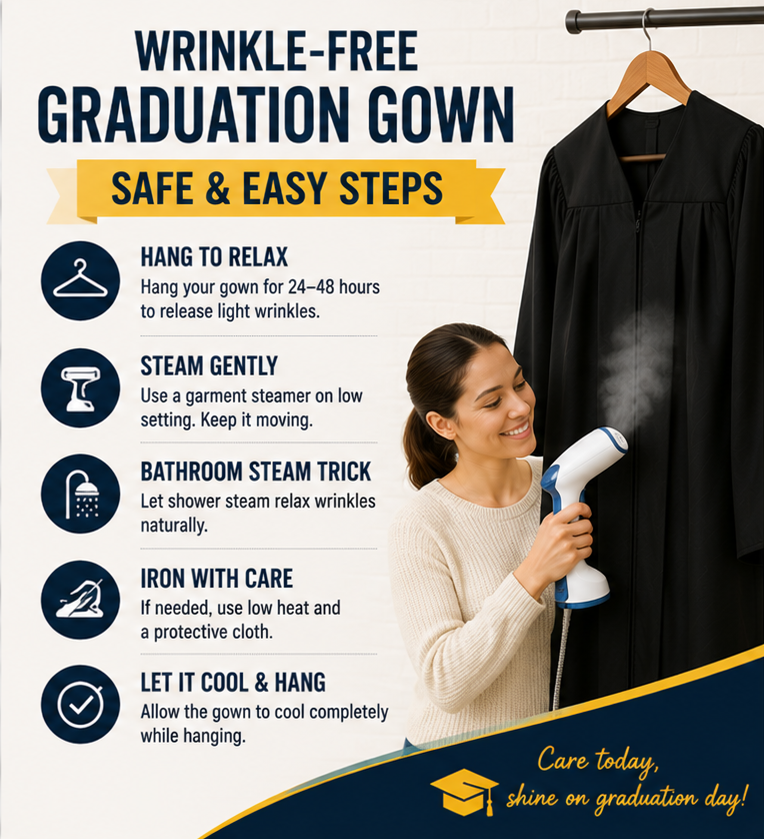
You have your cap, tassel, and graduation gown ready—but after removing the gown from its package, you notice folds and creases across the fabric. This is common with packaged academic apparel. Learning how to get wrinkles out of a masters graduation gown safely can help you achieve a smoother, photo-ready appearance without accidentally damaging the material.
Why Is My Graduation Gown So Wrinkled?
Graduation gowns are usually folded for packaging, storage, and transportation. Remaining folded can create visible creases, especially across the sleeves, front panels, and lower portion of the gown.
Instead of trying to remove every wrinkle immediately with high heat, begin with the gentlest method appropriate for your gown.
Check the Gown Care Instructions First
Before using steam, an iron, dryer, or any other treatment, inspect the care label on your masters graduation gown. Academic gowns can be made from different fabrics and finishes, and their care requirements may not be identical.
When the manufacturer’s instructions differ from general advice, follow the instructions for your particular garment.
Start by Hanging the Gown
One of the easiest ways to begin removing packaging creases requires no heat at all. Take the gown out of its package and place it on a sturdy hanger.
Let Gravity Work on the Fabric
Allow the gown to hang fully extended rather than leaving the bottom folded over a chair or shelf. Light creases may become less noticeable as the fabric relaxes.
Do This Before Commencement
- Unpack the gown several days early.
- Use a sturdy hanger.
- Straighten the sleeves and body.
- Keep the gown in a clean, dry location.
- Avoid folding it again unnecessarily.
Can You Steam a Graduation Gown?
If the garment’s care instructions allow it, careful steaming may help reduce more noticeable wrinkles. A garment steamer allows you to work gradually while the gown remains hanging.
Tips for Steaming Academic Gowns
- Read the gown and steamer instructions first.
- Test an inconspicuous section before treating visible areas.
- Avoid prolonged heat in one location.
- Work gradually from section to section.
- Allow the gown to cool and dry while hanging.
Avoid pressing a hot steamer directly against the material unless the manufacturer’s instructions specifically indicate that such contact is appropriate.
Try Indirect Bathroom Steam for Minor Creases
If you are dealing with relatively light wrinkles, hanging the gown in a steamy bathroom may help the fabric relax. Hang it securely away from the shower so it does not become wet.
Close the bathroom door while hot shower water creates steam in the room, then allow the gown to remain hanging afterward.
Keep the Gown Away From Water
Indirect humidity is different from soaking the garment. Keep the gown away from splashing water and hot surfaces.
Should You Iron a Graduation Gown?
Using an iron requires extra caution. Many graduation gowns use synthetic fabrics, and excessive direct heat can potentially affect their appearance.
If the garment label permits ironing, follow the specified temperature instructions. When appropriate, a clean pressing cloth between the iron and fabric can provide an additional barrier.
Never Start With Maximum Heat
More heat does not necessarily mean better results. Excessive temperatures may cause unwanted shine, marks, distortion, or other damage to heat-sensitive material.
Can a Graduation Gown Go in the Dryer?
Do not assume your gown is dryer-safe. Some fabrics may be sensitive to tumble drying or elevated temperatures.
Only use a dryer when the gown’s official care instructions indicate that the selected drying method is appropriate.
Do Matte and Shiny Graduation Gowns Need Different Care?
Matte graduation gowns and shiny graduation gowns have different finishes, and construction can vary among manufacturers. A treatment that appears safe for one product should not automatically be applied to another.
Always check the label on the actual garment you are preparing.
Be Extra Careful With Master’s and Doctoral Regalia
Graduate-level attire can contain additional design elements. Master’s and doctoral regalia may include specialized sleeves, velvet panels, sleeve bars, and academic hoods.
Do not automatically apply the same wrinkle-removal technique to velvet, hood components, or decorative materials that you use on the main gown fabric.
What About the Graduation Hood?
If your master’s or doctoral hood has creases, check its individual care instructions before treating it. Academic hoods can combine multiple materials, colors, trims, and linings.
When Should You Prepare Your Graduation Gown?
The best time to discover wrinkles is not an hour before commencement. Open your graduation package several days ahead whenever possible.
Your Pre-Graduation Regalia Check
- Verify the gown size.
- Confirm the correct color and finish.
- Inspect the gown for wrinkles.
- Read all care instructions.
- Hang the gown.
- Check the cap and tassel.
- Inspect the academic hood when required.
- Confirm honor cords and stoles.
- Try on the complete graduation outfit.
Wrinkle Removal Mistakes That Can Damage a Gown
Trying to make a gown perfectly smooth too quickly can create unnecessary risk. Avoid aggressive methods unless they are specifically permitted for your garment.
- Applying an extremely hot iron directly to the fabric
- Leaving a steamer concentrated on one area
- Using a dryer without checking the label
- Allowing shower water to contact the gown
- Applying treatment to velvet without checking instructions
- Using an unfamiliar product without testing it
- Waiting until graduation morning to start
How to Store Your Gown After Removing Wrinkles
Once the gown looks ready, keep it hanging whenever practical. Folding or compressing it again may recreate the same creases you just removed.
Keep Your Regalia Ready for Commencement
Store the gown somewhere clean and dry where it will not be crushed by other clothing. Keep the cap, tassel, hood, cords, and other accessories together so nothing is forgotten on graduation day.
Frequently Asked Questions
What is the easiest way to remove wrinkles from a graduation gown?
Begin by checking the care label, removing the gown from its packaging, and hanging it fully extended. Light packaging wrinkles may relax without additional treatment.
Is steaming better than ironing a graduation gown?
The appropriate method depends on the gown’s fabric and care instructions. If steaming is permitted, it can provide a gradual way to address wrinkles while the garment hangs. Do not assume either method is universally safe.
Can I use a hair dryer on my graduation gown?
Direct concentrated heat from a hair dryer should not be assumed safe for academic gown fabric. Follow the manufacturer’s recommended care methods instead.
How can I remove wrinkles at the last minute?
If commencement is close, start with the least aggressive method supported by the care instructions. Avoid experimenting with high temperatures simply because time is limited.
Make Your Graduation Gown Photo-Ready
Removing graduation gown wrinkles does not need to be complicated. Unpack the gown early, check its care instructions, hang it properly, and use only wrinkle-removal methods appropriate for the specific material.
Most importantly, avoid unnecessary high heat. Prepare your complete graduation regalia before commencement so your gown looks polished and you can spend the big day celebrating your achievement.