Finding the right graduation gown size is different from shopping for everyday clothing. Academic gowns are intentionally designed with a relaxed silhouette, and many are sized primarily according to the graduate’s height rather than a familiar small, medium, or large label. The goal is not a close-fitting garment. Instead, a good graduation gown should drape neatly, provide comfortable room underneath, and allow the graduate to walk across the stage without the hem becoming an obstacle.
This graduation gown size and fit guide explains how to measure yourself, evaluate gown length, understand degree-specific designs, recognize sizing problems, and complete a proper fitting before commencement.
What Does a Properly Fitted Graduation Gown Look Like?
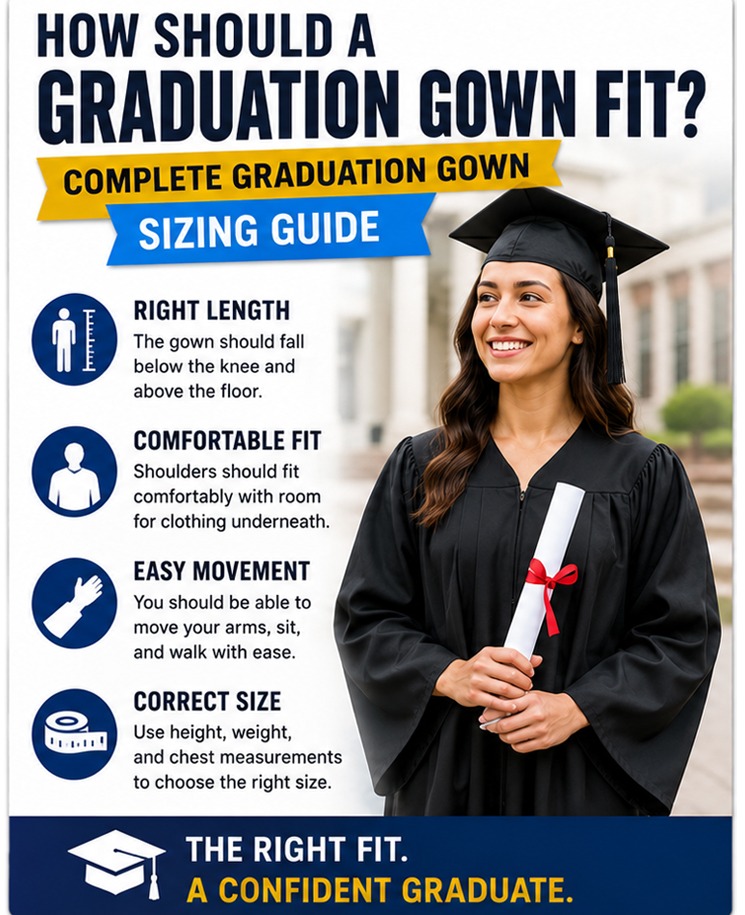
A graduation gown should appear full and flowing without overwhelming the graduate. There should be room through the chest and body, while the shoulders should remain comfortable and the gown length should provide adequate clearance from the floor.
The Correct Fit Should Provide
- A comfortable shoulder area
- Room for ceremony clothing underneath
- Easy movement through the arms
- A balanced appearance from front to back
- A hem that remains above the floor
- Enough mobility for sitting and standing
- Safe movement on stairs and across the stage
Why Graduation Gowns Do Not Fit Like Regular Clothes
One of the most common sizing mistakes is expecting academic regalia to fit like a dress, jacket, or coat. Graduation gowns are intentionally roomy.
The additional space serves a practical purpose because the gown is worn over another outfit. It also creates the traditional academic silhouette associated with commencement ceremonies.
Therefore, extra fabric around the body does not automatically mean your gown is too large.
What Size Graduation Gown Do I Need?
Start with the sizing chart for the exact graduation gown you are purchasing. Do not assume that every manufacturer uses the same size ranges.
Many standard gowns are organized according to height. Depending on the product, the chart may also ask for weight, chest size, or another measurement.
You May Need to Know Your
- Height
- Weight range
- Chest measurement
- Body build
- Degree level
- Standard or extended-size requirement
Measure Yourself Before Ordering
Even if you know your approximate height, measuring again before placing an order is worthwhile. A small difference can matter when you are near the boundary between two gown-length ranges.
How to Measure Your Height
Stand upright on a level surface without shoes. Keep your posture natural and measure from the floor to the top of your head.
Use that measurement with the supplier’s graduation gown size chart.
Why Your Normal Clothing Size May Not Help
A person who normally wears a medium shirt does not necessarily need a “medium” graduation gown. Academic apparel often uses an entirely different sizing system.
Likewise, choosing an extra-large gown simply because you normally purchase extra-large clothing can result in unnecessary gown length if the supplier’s system is primarily height-based.
How Long Should Your Graduation Gown Be?
Graduation gown length varies by manufacturer and style, but the gown should generally extend well below the knee while maintaining comfortable clearance from the floor.
Many properly fitted gowns appear around the mid- to lower-calf area. Exact placement can differ, so the manufacturer’s intended length should be considered.
Why Floor Clearance Matters
Commencement often involves more movement than graduates expect. You may walk through a processional, climb stairs, cross a stage, navigate ramps, stand for photographs, and walk through crowded hallways.
A gown that hangs too close to the floor can interfere with those movements.
When Checking the Hem, Make Sure You Can
- Walk normally
- Take comfortable steps
- Use stairs
- Turn without stepping on the gown
- Stand without the hem touching the floor
Can a Graduation Gown Be Too Short?
Yes. Although gown length varies, a gown that ends much higher than the intended design may indicate that you selected a height range that is too short.
Compare the actual fit with the supplier’s sizing information before deciding whether an exchange is necessary.
Can a Graduation Gown Be Too Long?
Yes. If the gown reaches your shoes, brushes the floor, or creates difficulty when walking, check the size label against the size you ordered.
Excessive length may indicate that a shorter height range would be more appropriate.
How Should the Shoulders Fit?
The gown should rest naturally over the shoulders. Some looseness is expected, but you should not experience significant tension when moving your arms.
Test the fit by moving both arms forward, outward, and upward. Academic sleeves may restrict movement somewhat because of their design, particularly at advanced degree levels, but the body of the gown should not feel painfully tight.
How Much Space Should Be in the Chest?
There should be enough space to wear your planned ceremony clothing underneath without straining the gown closure.
If your gown has a zipper, close it during the fitting. The front should close without excessive pulling across the chest or abdomen.
Check Your Fit While Sitting Down
A gown can appear comfortable while standing but feel restrictive after you sit.
Since graduates may remain seated for a substantial portion of commencement, sit in a chair during your fitting and make sure the gown does not feel excessively tight across the shoulders, back, or body.
Graduation Gown Sleeve Length and Style
Sleeves are one area where graduates frequently mistake traditional academic design for a sizing problem.
Bachelor’s, master’s, and doctoral gowns can have substantially different sleeves. Before deciding that your sleeves are too long or unusually shaped, confirm what the correct sleeve construction should look like for your degree level.
How Should a Bachelor’s Gown Fit?
A bachelor’s graduation gown typically has a flowing body and pointed sleeves. The gown should provide enough room for the graduate’s clothing while hanging evenly from the shoulders.
Check the Bachelor’s Gown for
- Comfortable shoulders
- Room through the body
- Appropriate overall length
- Unrestricted walking
- Correct sleeve design
How Should a Master’s Gown Fit?
Master’s gowns can look unusual to someone seeing one for the first time because of their distinctive sleeve construction.
Do not attempt to make a master’s gown look like a bachelor’s gown. Instead, evaluate whether the shoulders and body fit comfortably and whether the overall gown length corresponds with your height.
How Should a Doctoral Gown Fit?
A doctoral graduation gown may include velvet facings and sleeve bars that give it more structure and visual weight.
Doctoral buyers should consider height as well as relevant chest and body measurements, particularly when purchasing premium or tailored regalia.
The gown should maintain its formal appearance while still allowing comfortable sitting, standing, and walking.
Standard Doctoral Gowns vs. Custom-Fitted Regalia
Standard doctoral gowns are commonly produced in predetermined size ranges. Custom doctoral regalia may use more detailed body measurements.
If ordering custom academic apparel, follow the supplier’s measurement instructions carefully rather than applying measurements from another clothing manufacturer.
How Should a High School Graduation Gown Fit?
High school gowns should have a relaxed fit while maintaining a consistent appearance across the graduating class.
Correct length is especially important because graduates may walk long distances during processional and recessional activities.
Students should also confirm that the gown’s color and matte or shiny finish match school requirements.
How Should an Elementary or Middle School Graduation Gown Fit?
For younger students participating in promotion or graduation ceremonies, mobility should be a priority.
The gown should provide enough room for comfortable clothing underneath without creating excessive fabric around the feet or hands.
How Should a Preschool Graduation Gown Fit?
Preschool graduates need enough gown clearance to walk confidently. A gown that is only slightly too long for an adult can create a much greater mobility issue for a small child.
Check That the Child Can
- Walk without stepping on the hem
- Raise both arms
- Sit comfortably
- Move without getting tangled in the gown
- Wear the cap comfortably
Kindergarten Graduation Gown Sizing
Kindergarten gowns should also be selected according to the child’s actual height whenever the product provides height-based sizing.
Avoid purchasing a significantly oversized gown simply so the child can “grow into it.” Graduation apparel is intended to fit appropriately for the ceremony taking place now.
What Is an Extended-Size Graduation Gown?
Some graduates need additional room through the chest, shoulders, arms, or body without requiring additional gown length.
Extended-size or plus-size graduation gowns are designed to provide this extra space while maintaining a more appropriate relationship between body room and gown length.
Why Simply Ordering a Taller Size May Not Work
Suppose your height indicates one size but you need more room through the body. Moving to a much taller gown size may add body space, but it may also make the gown unnecessarily long.
When available, an extended-size option may provide a better solution.
How Should a Plus-Size Graduation Gown Fit?
A plus-size graduation gown should retain the traditional flowing appearance without pulling across the chest, back, or arms.
There should be enough room to zip the gown comfortably and move naturally while keeping the hem at a safe length.
What If You Have Broad Shoulders?
Graduates with broad shoulders should pay particular attention to any chest or body measurements included in the size chart.
If a standard gown corresponding to your height is restrictive through the shoulders, check whether the supplier offers a fuller-fit or extended-size version.
What If You Are Very Slim?
A slim graduate should still choose a gown based on the manufacturer’s recommended height range rather than intentionally selecting a shorter gown to reduce body volume.
Academic gowns are supposed to have fullness through the body.
What If You Are Between Two Height Ranges?
When your height falls directly between sizes, consult the supplier’s sizing instructions rather than automatically choosing the larger option.
Consider the expected gown length, your body measurements, and whether the manufacturer provides a specific recommendation for borderline measurements.
Does Your Graduation Outfit Affect Gown Fit?
Yes. The amount and type of clothing underneath can change how the gown feels.
A gown tried on over a lightweight T-shirt may feel different when worn over a dress shirt, blazer, sweater, or other ceremony outfit.
Complete Your Fitting With Similar Clothing
You do not necessarily need to wear your exact graduation outfit during the first fitting, but using clothing with a similar thickness can give you a more realistic assessment.
Consider the Difference Between
- A lightweight shirt and a sweater
- A blouse and a blazer
- A thin dress and layered clothing
- Warm-weather and cold-weather ceremony attire
Should You Size Up to Wear a Suit Under the Gown?
Not automatically. Academic gowns already include room for clothing underneath.
Check the actual measurements and try the gown over your planned suit jacket before deciding whether a larger or extended size is necessary.
Does Shoe Height Change Gown Sizing?
Your actual body height should normally be used when selecting a height-based gown size unless the manufacturer specifically instructs otherwise.
However, you should wear your graduation shoes during the final fitting because they affect the visual relationship between the gown hem, legs, and footwear.
Signs Your Graduation Gown Fits Correctly
- The gown rests comfortably on your shoulders
- You can close the zipper without strain
- You can sit comfortably
- You can raise and move your arms
- The gown hangs evenly
- The hem stays safely above the floor
- You can walk without stepping on the fabric
- Your ceremony clothing fits comfortably underneath
Signs Your Graduation Gown Is Too Tight
- The zipper pulls apart or is difficult to close
- The chest area looks strained
- The shoulders feel tight
- The gown pulls across the back
- Sitting is uncomfortable
- Arm movement feels unusually restricted
Signs Your Graduation Gown Is Too Large
- The hem is dangerously close to the floor
- The shoulders drop excessively
- There is an unusually large amount of fabric around the body
- The gown interferes with walking
- The sleeves make normal hand movement difficult beyond what the design intends
What If the Gown Fits the Body but Is Too Long?
First confirm that you received the size ordered. Then compare the gown with the manufacturer’s chart.
If another size provides the same necessary body room with a more appropriate length, an exchange may be preferable to altering the garment.
What If the Length Is Correct but the Body Is Tight?
Look for an extended-size or fuller-cut version designed for your height range. This can provide additional room without unnecessarily increasing the gown length.
Should You Alter a Graduation Gown?
Major alterations are usually unnecessary when the correct size is available. Alterations can also change the intended academic proportions of the garment.
If you are considering permanent modifications, first check the seller’s exchange options and any school requirements regarding standardized regalia.
Can You Shorten an Overly Long Graduation Gown?
Before changing the hem, verify that the gown is actually the correct size. An exchange for the appropriate height range may produce a better overall result.
If alteration is necessary, consider whether your school requires all gowns to maintain a consistent appearance.
Do Not Try to Shrink a Graduation Gown
Trying to shrink an oversized gown is not a reliable sizing solution. Many academic gowns are made from synthetic materials that can react poorly to excessive heat.
Follow the garment’s care instructions rather than attempting to change its size through washing or heating.
Why You Should Try the Gown On Immediately After Delivery
The best time to discover a sizing problem is when there is still time to address it.
Open your graduation order shortly after it arrives and perform a complete initial fitting.
During Your First Fitting
- Confirm the size label
- Put on the gown
- Close the zipper
- Check the shoulders
- Check overall body room
- Look at the hem
- Move your arms
- Sit in a chair
- Walk around the room
Use a Full-Length Mirror
A full-length mirror makes it easier to evaluate gown proportions. Look at where the hem falls and whether the gown appears balanced from shoulder to floor.
Turn sideways as well. This can reveal pulling or excessive fullness that may be less obvious from the front.
Take a Photo During the Fitting
A photograph can provide another useful perspective on gown length and overall appearance.
Take front, side, and back photos if possible, particularly when evaluating premium master’s or doctoral regalia.
Complete a Graduation Regalia Dress Rehearsal
Several days before commencement, perform a second fitting using the entire outfit.
Wear
- Your ceremony clothing
- Graduation gown
- Mortarboard or tam
- Tassel
- Academic hood when required
- Approved graduation stole
- Honor cords
- Medals when permitted
- Graduation shoes
Check Fit With an Academic Hood
Master’s and doctoral graduates should include the hood in the final fitting. Although the hood usually does not determine gown size, it changes the way the complete regalia sits around the shoulders and back.
Check Fit With Graduation Stoles and Honor Cords
Stoles and cords add layers to the front of the gown. Put them on during the final fitting to make sure they hang neatly and do not interfere with the zipper or hood.
Practice Walking Before Commencement
Once you are wearing the complete outfit, walk across the room several times. If possible, safely test a few stairs.
Pay particular attention to whether the hem comes near your shoes when climbing or descending.
Outdoor Ceremony Fit Considerations
Graduates attending an outdoor ceremony may need to walk across grass, pavement, ramps, or uneven terrain.
A correctly sized gown that provides adequate floor clearance is especially valuable in these conditions.
Warm-Weather Graduation Fit
Graduation gowns can add warmth because they create another clothing layer. For warm ceremonies, consider lighter clothing underneath when consistent with school expectations.
A correctly fitted gown should provide enough room for air movement without excessive fabric.
Cold-Weather Graduation Fit
If commencement will take place in a colder environment, account for the clothing you plan to wear underneath.
Try the gown over comparable layers ahead of time instead of discovering on graduation morning that a jacket or sweater makes the gown too tight.
Group Graduation Gown Sizing
Schools and organizations ordering gowns for an entire graduating class should collect accurate sizing information from every participant.
A Group Sizing Sheet Can Include
- Graduate name
- Height
- Weight range when required
- Chest measurement when required
- Standard or extended size
- Gown size ordered
Do Not Estimate Sizes for an Entire Class
Even students who appear to be similar in height may need different size ranges. Collect individual measurements instead of making visual estimates.
Allow Time for Group Fittings
Schools should distribute gowns early enough for graduates to try them on before commencement.
Finding a sizing issue during distribution is much easier to manage than finding it while students are lining up for the ceremony.
Graduation Gown Fit Checklist
Before You Order
- Confirm the correct degree-level gown
- Measure your height accurately
- Review weight requirements
- Check chest measurements when applicable
- Determine whether extended sizing is needed
- Use the exact product size chart
When Your Gown Arrives
- Confirm the size label
- Try it on immediately
- Close the zipper
- Check shoulder comfort
- Check body room
- Check sleeve movement
- Inspect gown length
- Sit down
- Walk around
During the Final Fitting
- Wear your ceremony clothing
- Wear graduation shoes
- Add the cap or tam
- Add the academic hood
- Add approved stoles and cords
- Check the gown in a full-length mirror
- Walk in the complete outfit
- Check the hem around stairs
Frequently Asked Questions About Graduation Gown Sizing
Are graduation gowns supposed to be oversized?
Graduation gowns are intentionally loose and flowing, but they should not be so oversized that the length or excess fabric interferes with comfortable movement.
How far down should my graduation gown go?
Exact lengths vary by design and manufacturer, but a graduation gown commonly falls somewhere around the mid- to lower-calf region and should remain safely above the floor.
Why does my graduation gown feel so loose?
Academic gowns are designed to be roomy. Extra space accommodates clothing underneath and creates the traditional academic silhouette.
Should I order my normal clothing size?
Not unless the particular supplier uses standard clothing sizes. Many graduation gowns are primarily sized according to height, with weight or chest measurements used when necessary.
Should I choose a bigger graduation gown if I am between sizes?
Not automatically. Use the manufacturer’s specific guidance because moving to a larger height range can make the gown unnecessarily long.
What should I do if I need more body room but not more length?
Check whether an extended-size or fuller-fit gown is available for your height range.
Should the graduation gown cover my shoes?
No. Your shoes and part of your lower legs will generally remain visible. The gown should provide adequate clearance above the floor.
How do I know whether my gown is too tight?
Difficulty closing the zipper, pulling across the chest or back, uncomfortable shoulders, and restricted movement can indicate insufficient room.
How early should I check my graduation gown size?
Try the gown on soon after receiving it. This provides more time to address potential sizing issues before commencement.
Should master’s and doctoral graduates fit the gown with the hood?
Yes. Including the academic hood in the final fitting helps you evaluate how the complete regalia sits around the shoulders and back.
Getting the Right Graduation Gown Fit
Choosing the correct graduation gown size is primarily about balancing traditional academic fullness with proper length, adequate body room, and comfortable movement. A graduation gown is not supposed to hug the body, but it also should not create a walking hazard or overwhelm the graduate.
Measure yourself accurately, use the size chart for the exact product, and pay attention to any weight, chest, or extended-size recommendations. Once the gown arrives, try it on rather than relying only on the label.
The best-fitting graduation gown is one that hangs naturally from the shoulders, accommodates your ceremony clothing, stays safely above the floor, and lets you sit, walk, climb stairs, and cross the graduation stage comfortably.