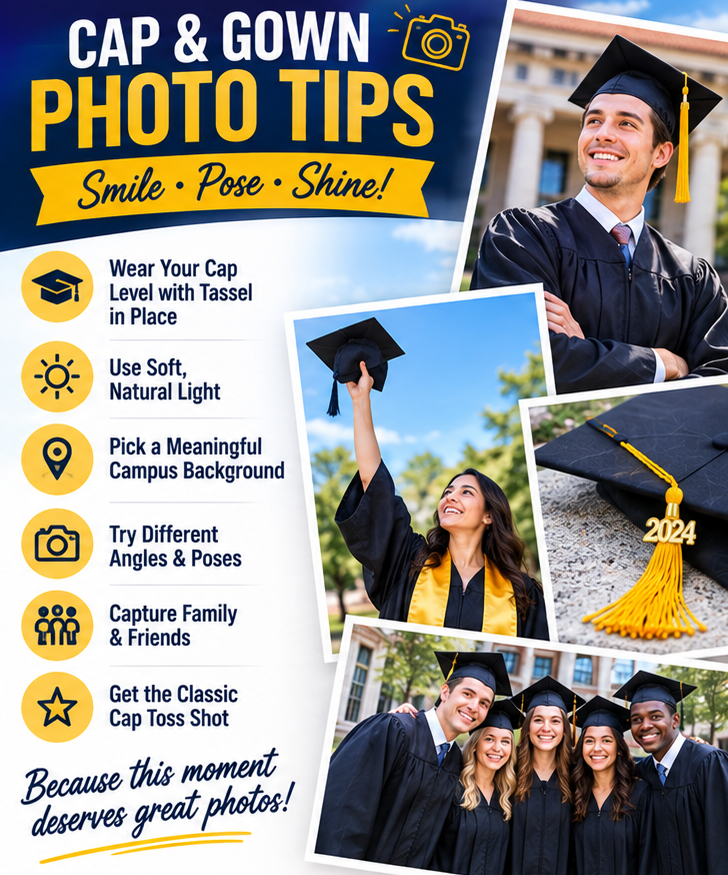
Your graduation pictures will preserve one of your biggest achievements long after commencement is over. A little planning can make a major difference. From preparing your academic regalia to choosing flattering lighting and natural poses, these graduation photo tips can help you create memorable cap and gown pictures.
Plan Your Graduation Photos Before Commencement
Graduation day can become busy quickly. Instead of waiting until the ceremony ends to decide where and how to take pictures, create a simple photography plan beforehand.
Decide Which Photos Matter Most
- Traditional cap and gown portrait
- Full-length graduation photo
- Diploma pose
- Cap toss picture
- Family photographs
- Pictures with classmates
- Campus landmark photos
- Close-ups of graduation accessories
Make Your Graduation Gown Camera-Ready
A wrinkled gown can become especially noticeable in photographs. Remove your doctoral graduation gown from its packaging ahead of time and follow the garment’s care instructions for safely reducing packaging creases.
Do a Final Regalia Check
Before taking pictures, straighten the gown and make sure your cap, tassel, honor cords, stole, and academic hood are positioned properly.
Position Your Graduation Cap for Photos
Your mortarboard is highly visible in portraits. Position it securely so the square board appears approximately level instead of pushed dramatically toward the back of your head.
Watch the Tassel
Make sure the tassel hangs naturally and does not cover your eyes or face. Straighten the graduation-year charm when applicable.
Find Light That Flatters Your Face
Lighting can have a greater impact on a photograph than an expensive camera. Very bright overhead sunlight may create shadows from the mortarboard across your face.
Look for Soft, Even Light
Open shade near a building, tree, or covered campus area can provide softer lighting. When possible, experiment with several locations rather than taking every photograph in direct midday sun.
Use Your Campus as the Background
A meaningful setting can make graduation pictures feel more personal. Think about places connected to your experience rather than choosing a random background.
Campus Graduation Photo Ideas
- University or school sign
- Main entrance
- Favorite academic building
- Library steps
- Campus courtyard
- Stadium
- School monument
- Tree-lined walkway
Take Both Vertical and Horizontal Photos
Do not photograph everything in one orientation. Vertical images work well for full-length portraits and social media stories, while horizontal photographs can capture groups, buildings, and wider campus scenes.
Use Natural Graduation Poses
You do not need complicated poses to create attractive graduation pictures. Small movements often produce more natural results than standing rigidly in front of the camera.
Easy Graduation Poses to Try
- Walk slowly toward the camera
- Turn your body slightly sideways
- Hold your diploma in front of you
- Look away and then back toward the camera
- Adjust your tassel naturally
- Hold the edges of your graduation stole
- Look back over your shoulder
- Celebrate with your arms raised
Capture Your Graduation Regalia Details
Not every picture needs to show your entire body. Close-up photographs can document the details that make your graduation attire personal.
Details Worth Photographing
- Tassel and year charm
- Honor cords
- Graduation stole
- Diploma or diploma cover
- Academic hood
- Doctoral sleeve bars
- School-approved decorated mortarboard
Show Your Degree-Level Regalia
Academic attire differs between bachelor’s, master’s, and doctoral graduates. Your photographs can highlight these distinctions.
Bachelor’s Graduation Photos
Capture the traditional bachelor cap, gown, and tassel together. Full-length portraits and classic diploma poses work particularly well.
Master’s Graduation Photos
Make sure the master’s hood is arranged correctly and visible. Consider taking a few photographs from an angle that highlights the distinctive master’s gown sleeves.
Doctoral Graduation Photos
Doctoral portraits can showcase the velvet panels, sleeve bars, academic hood, and doctoral tam. These details are an important part of traditional doctoral regalia.
Take Graduation Photos With Your Family
Your achievement may represent years of encouragement and support from people around you. Include parents, grandparents, siblings, spouses, children, and other important family members in some photographs.
Remember the People Who Shared the Journey
Take pictures with classmates, professors, teachers, mentors, and friends when appropriate. These photographs can become especially meaningful years after graduation.
Try a Cap Toss Photo
The classic graduation cap toss can create an energetic celebration picture. Use an open location where throwing caps is permitted and make sure people have enough room.
Take Several Frames
Use your phone’s burst or continuous shooting feature when available. Start taking pictures before the cap leaves the graduate’s hand and continue until it comes back down.
Capture Candid Graduation Moments
Some of the most memorable pictures happen between formal poses. Capture laughter with classmates, family hugs, adjusting the tassel, walking across campus, and reactions immediately after commencement.
Take Photos Before and After the Ceremony
Before commencement, your doctoral cap and gown may be neatly arranged and the campus may be less crowded. Afterward, the excitement can create more spontaneous photographs.
Using both opportunities gives you a more complete collection of graduation memories.
Take a Few Photos Without the Graduation Gown
Your outfit underneath the gown is also part of the day. Consider taking several portraits without the gown while holding your cap, diploma, stole, or another graduation accessory.
Graduation Photo Mistakes to Avoid
- Taking every picture in harsh sunlight
- Leaving the graduation gown visibly wrinkled
- Positioning the mortarboard too far backward
- Letting the tassel cover your face
- Using the same pose repeatedly
- Choosing cluttered backgrounds
- Forgetting full-length photographs
- Skipping family and group pictures
- Waiting until everyone has left campus
Graduation Photography Checklist
- Prepare your gown ahead of time
- Check your mortarboard and tassel
- Straighten cords, stole, and hood
- Choose several campus locations
- Find soft, flattering light
- Take vertical and horizontal photos
- Capture full-length and close-up portraits
- Photograph regalia details
- Take family and classmate pictures
- Capture candid moments
- Try one fun celebration shot
Frequently Asked Questions About Graduation Pictures
How should I pose in a graduation gown?
Relax your shoulders, stand naturally, and turn your body slightly rather than facing the camera rigidly. Mix traditional portraits with walking, diploma, tassel, and celebration poses.
How can I prevent my graduation cap from creating a shadow?
Strong overhead sunlight can cause the mortarboard to shade your face. Moving into open shade or choosing softer lighting can help reduce harsh shadows.
Should I take graduation photos before the ceremony?
Taking some photos beforehand can provide more time, cleaner regalia, and less crowded backgrounds. You can then capture additional celebration and family photographs after commencement.
What should I bring to a graduation photo session?
Bring your complete academic regalia along with any school-approved cords, stole, hood, diploma cover, or other accessories you want included in your photographs.
Create Graduation Photos Worth Keeping
Great cap and gown graduation pictures are not about complicated poses or expensive equipment. Preparing your regalia, finding flattering light, selecting meaningful locations, and capturing a mixture of formal and candid moments can make a significant difference.
Photograph the cap and gown, but also capture the people, places, emotions, and academic details that tell the story behind your achievement. Those are the graduation pictures you may appreciate most years from now.