Apprenticeship and skilled workforce programs recognize achievement in a different way from traditional academic graduation. Participants may complete extensive workplace learning, technical instruction, supervised skills development and occupation-specific requirements before reaching their program milestone.
Government agencies, apprenticeship sponsors, workforce organizations, public colleges, technical education providers and other authorized organizations may hold ceremonies to recognize these accomplishments.
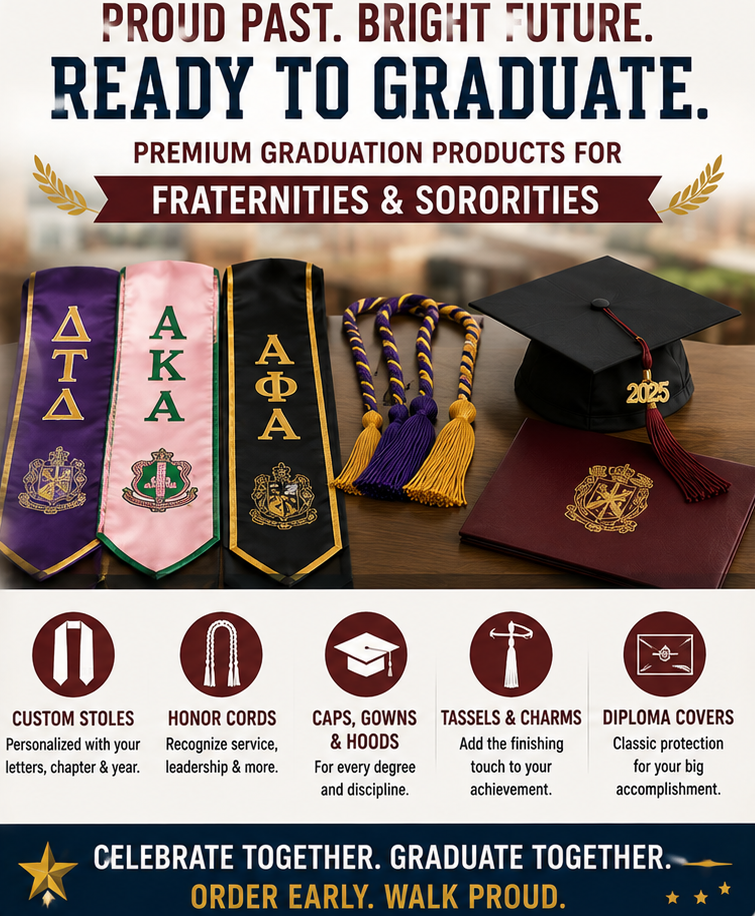
Depending on the event, government apprenticeship graduation regalia may include graduation Masters gown, mortarboard caps, tassels, certificate covers, stoles, recognition cords and related ceremony products.
The most effective approach is to build the recognition package around the achievement being celebrated rather than assuming every apprenticeship participant needs conventional academic regalia.
Design the Recognition Package Around the Completion Milestone
Begin ceremony planning by identifying exactly what participants have completed.
A recognition event may celebrate:
- Registered Apprenticeship completion
- Pre-apprenticeship completion
- Journey-level advancement
- Occupational skills training
- Technical instruction completion
- Industry certification preparation
- Workforce training completion
- Youth apprenticeship participation or completion
- Public-sector apprenticeship completion
- Employer-sponsored skills development
- Community college workforce training
- Career and technical education achievement
These accomplishments are not interchangeable. Ceremony terminology and recognition merchandise should accurately describe the participant’s actual milestone.
Apprenticeship Recognition Does Not Have to Copy College Commencement
A professional apprenticeship ceremony can be formal without duplicating university commencement traditions.
Organizations can select the level of formality that fits the program.
Certificate-Focused Recognition
Participants receive their completion documents in presentation covers. A stole or recognition cord may be added when appropriate.
Formal Workforce Recognition
Participants wear coordinated graduation Doctoral gowns while completion certificates remain the primary recognition item.
Traditional Graduation Presentation
Participants wear gowns, mortarboards and tassels and receive certificates during a formal procession or presentation.
Career Pathway Recognition
A standard gown is combined with approved stoles or cords that identify occupations, programs or organization-defined achievements.
Develop a Core Ceremony Package
Programs that hold recurring completion events can simplify future purchasing by establishing a standard core package.
For example:
- One standard graduation gown
- One mortarboard cap
- One standard or approved tassel
- One certificate cover
Stoles, cords and customized accessories can then be assigned only to participants who require them.
Why a Standard Core Package Helps
A repeatable specification can make it easier to:
- Forecast annual costs
- Collect participant sizes
- Compare supplier quotations
- Consolidate multiple programs
- Manage leftover inventory
- Handle late additions
- Place supplemental orders
- Maintain visual consistency
Select Gowns for the Ceremony, Not the Occupation
Organizations do not necessarily need a different gown for every skilled occupation.
A government workforce ceremony might recognize electricians, welders, healthcare workers, technicians, construction apprentices and information technology participants at the same event.
Using one approved gown specification can create a coordinated appearance while other accessories identify individual pathways.
Graduation Gown Specifications
When creating an institutional gown specification, consider:
- Gown style
- Color
- Matte or shiny finish
- Fabric
- Construction
- Closure style
- Available size range
- Extended sizing
- Current inventory availability
- Compatibility with existing gowns
There Is No Universal Apprenticeship Graduation Color
No single graduation gown color universally identifies apprenticeship or government skills training.
Programs can choose an available color consistent with their ceremony requirements.
For recurring events, maintaining the same gown specification can simplify future purchasing and allow appropriate unused standard merchandise to remain useful.
Matte vs. Shiny Gowns
Matte gowns provide a lower-reflection appearance, while shiny gowns have more visible sheen.
The choice is primarily a ceremony and product-specification decision. Neither finish indicates a particular apprenticeship level or government designation.
Create a Better Apprenticeship Sizing Process
Bulk gown ordering works best when sizing is treated as a separate project rather than simply collecting participant clothing sizes.
Use the sizing instructions for the exact gown product being ordered.
Recommended Process
- Confirm the gown model
- Obtain its current sizing chart
- Send sizing instructions to participants
- Collect required measurements or sizing information
- Assign sizes according to the chart
- Identify extended-size requirements
- Review the size distribution
- Calculate quantities by size
- Retain the participant roster internally
- Provide aggregate size quantities to the supplier where practical
Adult Workforce Programs Need Broad Size Planning
Apprenticeship cohorts can include adults across a wide range of ages, heights and body types.
Institutional buyers should review the complete available size range before selecting a gown for a large group.
Extended-size requirements should be identified before the primary order whenever possible.
Mortarboards for Apprenticeship Ceremonies
A mortarboard can be included when the organizer wants a traditional graduation appearance.
Before ordering, establish:
- Cap color
- Cap style
- Quantity
- Whether caps match the gown
- Whether decoration is permitted
- Whether caps are retained by participants
Create a Practical Tassel Strategy
Tassels can be selected to coordinate with the ceremony without implying an official nationwide apprenticeship color designation.
Organizations might use:
- One standard tassel color
- A two-color tassel
- Different organization-approved colors by pathway
- Dated tassels
- Undated tassels
When Undated Tassels May Be Useful
Some apprenticeship programs recognize completers several times during the year rather than conducting one annual ceremony.
Undated tassels can provide more inventory flexibility for recurring events. Year-specific tassels can still be used when commemorating the completion year is important.
Make Certificate Presentation a Major Part of the Ceremony
For apprenticeship and occupational training programs, the completion document may be more important than traditional academic accessories.
A certificate cover can provide a professional presentation while keeping the actual credential clearly visible as the central achievement.
Certificate Cover Specifications
Before requesting pricing, confirm:
- Exact certificate dimensions
- Portrait or landscape orientation
- Cover dimensions
- Cover color
- Interior configuration
- Quantity
- Whether a blank or customized cover is required
Do Not Assume Every Certificate Is the Same Size
One apprenticeship initiative may involve several training providers.
A completion document issued through an apprenticeship program may have different dimensions from a certificate issued by a technical school, community college or other training organization.
Measure the actual documents before ordering covers.
Use Stoles to Identify Career Pathways
Stoles can distinguish occupational groups while allowing participants to wear the same basic gown.
An organization may choose to create recognition categories for pathways such as:
- Building trades
- Electrical occupations
- Plumbing
- HVAC
- Welding
- Manufacturing
- Machining
- Automotive service
- Transportation
- Healthcare
- Information technology
- Cybersecurity
- Education
- Public service
- Culinary and hospitality
Establish an Internal Stole Policy
There is no universal nationwide apprenticeship stole-color system.
If an organization uses stole colors to distinguish programs, document the meaning of each color internally.
This can prevent one year’s ceremony from using a different color system from the next.
Plain vs. Customized Stoles
Plain stoles can offer flexibility for programs that do not require program-specific wording.
Customized stoles can provide stronger identification but require more planning.
Custom-product planning may include:
- Approved wording
- Artwork
- Stole color
- Decoration method
- Quantity
- Minimum quantity where applicable
- Proof approval
- Production time
Recognition Cords for Skills and Achievement
Cords can recognize accomplishments beyond basic program completion.
An organization might create distinctions for:
- Leadership
- Technical excellence
- Service
- Mentorship
- Outstanding performance
- Multiple credentials
- Program achievement
The organization should establish who qualifies and what each color means.
Avoid Inventing Universal Cord Meanings
A cord color used for technical excellence by one apprenticeship sponsor may mean something different elsewhere.
Programs should communicate their own recognition system rather than presenting local choices as nationwide apprenticeship standards.
Skilled Trades Completion Ceremonies
Skilled trades remain an important area for apprenticeship recognition.
Programs can use a coordinated gown and certificate presentation while distinguishing occupational groups with approved accessories.
This can work well for ceremonies involving construction, electrical, plumbing, HVAC, welding, machining and related occupations.
Manufacturing and Industrial Skills Programs
Manufacturing programs may recognize apprentices and trainees completing programs in machining, industrial maintenance, mechatronics, CNC, production technology and related fields.
A standard ceremony package can be combined with occupation-specific recognition when the program chooses to distinguish pathways.
Healthcare Apprenticeship Recognition
Healthcare apprenticeship participants may complete occupation-specific training while also pursuing separate licenses, certifications or academic credentials.
The ceremony should clearly distinguish apprenticeship completion from professional licensure or an academic degree.
Technology Apprenticeship Recognition
Apprenticeships increasingly cover occupations beyond traditional trades, including information technology and cybersecurity.
Recognition products can remain consistent across industries: gown where appropriate, certificate presentation and approved accessories based on the program’s ceremony design.
Public-Sector Apprenticeship Programs
Government employers may use apprenticeship and structured workforce training to develop talent for public-service occupations.
A public agency organizing a recognition event should establish the ceremony format while following its internal purchasing, funding, branding and records requirements.
Pre-Apprenticeship Programs Need Accurate Recognition
Pre-apprenticeship is distinct from completing a Registered Apprenticeship Program.
A pre-apprenticeship participant may be recognized with:
- A completion certificate
- A certificate cover
- A standard gown
- A recognition stole
- A program-defined cord
The event should describe the participant’s accomplishment accurately and should not imply completion of a credential that has not been earned.
Youth Apprenticeship and Career Programs
Youth participants may simultaneously be involved in high school, career education, pre-apprenticeship or apprenticeship activities.
Before choosing regalia, identify which achievement the ceremony is recognizing.
High school graduation apparel requirements should remain separate from apprenticeship recognition unless the responsible organization intentionally coordinates the two.
Apprenticeship Programs Connected to Colleges
Some apprenticeship programs partner with community colleges or other educational institutions.
A participant may earn apprenticeship recognition, a college certificate or an academic degree.
When a degree is being awarded, the degree-granting institution’s academic regalia requirements should control.
Academic Hoods Should Be Credential-Specific
An academic hood should not be added simply because a ceremony is formal.
Hoods are associated with specific academic traditions and institutional requirements. Apprenticeship or workforce certificate completion alone does not automatically require one.
Multi-Employer Apprenticeship Programs
Some apprenticeship initiatives involve multiple participating employers.
For a shared recognition ceremony, organizers should decide whether products will be standardized across employers or whether approved accessories will distinguish participating organizations.
A standardized gown can simplify the base order while preserving flexibility for program-specific recognition.
Multi-Provider Training Programs
Apprenticeship participants may receive related instruction from different educational or training providers.
A central ceremony coordinator should gather requirements from each provider before creating the final order.
Use a Program-Level Order Worksheet
Each participating program or location can submit:
- Program identifier
- Achievement being recognized
- Estimated completers
- Confirmed ceremony participants
- Gown sizes
- Extended sizes
- Cap quantities
- Tassel specification
- Certificate-cover size and quantity
- Stole quantities
- Cord quantities
- Customization requirements
- Ceremony date
- Required arrival date
- Receiving location
Consolidate Identical Products
If multiple programs use the same gown, cap or certificate cover, purchasing staff can combine those requirements when requesting institutional pricing.
Program-specific accessories can remain separate line items.
Keep a Distribution Schedule
A consolidated purchase order should not eliminate site-level records.
Maintain an allocation showing which merchandise belongs to each program, employer or training location.
Forecast Based on Expected Completers
Enrollment alone may overstate the number of participants who need ceremony merchandise.
Useful planning data can include:
- Total enrolled apprentices
- Expected completers
- Confirmed completers
- Confirmed ceremony participants
- Existing inventory
- Historical size distribution
Use Multiple Quantity Checkpoints
Initial Forecast
Estimate quantities for budgeting and early supplier discussions.
Preliminary Count
Update the estimate when expected completion status and participant sizing become clearer.
Final Main-Order Count
Confirm the best available quantities before the primary purchasing deadline.
Count Products Individually
A participant count should not automatically become the quantity for every item.
For example, an event could require:
- 300 certificate covers
- 270 gowns
- 270 mortarboards
- 270 tassels
- 160 stoles
- 50 recognition cords
The quantities should reflect the actual recognition plan.
Inventory Existing Supplies First
Recurring programs should count merchandise already available before purchasing replacements.
Track usable inventory by exact specification, including:
- Gown color and finish
- Gown sizes
- Extended sizes
- Caps
- Undated tassels
- Certificate covers
- Plain stoles
- Standard cords
Separate Flexible Inventory From Event-Specific Inventory
Standard gowns and undated accessories may remain useful for later ceremonies.
Year-specific tassels, customized stoles and program-specific merchandise can have less future flexibility.
This distinction can help organizations decide where additional backup quantities make sense.
Prepare a Supplier-Ready Specification
A government or institutional quotation request should contain enough detail for suppliers to understand the complete requirement.
Include:
- Product descriptions
- Quantities
- Gown size distribution
- Colors
- Finishes
- Cap requirements
- Tassel requirements
- Certificate-cover dimensions
- Stole specifications
- Cord configurations
- Customization
- Packaging instructions
- Delivery locations
- Required arrival date
Use Line-Item Pricing for Better Comparison
Separate pricing can help institutional buyers understand how quantity changes affect the order.
Useful line items can include:
- Gowns
- Mortarboards
- Tassels
- Complete cap, gown and tassel sets
- Certificate covers
- Plain stoles
- Customized stoles
- Single cords
- Double cords
- Intertwined cords
- Customization charges
- Shipping or freight
Compare Products, Not Just Prices
Two quotations may appear similar while describing different products.
Compare:
- Gown construction
- Material
- Finish
- Color
- Size range
- Extended-size availability
- Package contents
- Accessory specifications
- Customization
- Processing requirements
- Delivery terms
Calculate Total Delivered Cost
Institutional buyers should consider the complete expected cost associated with the specified order.
Depending on the purchase, this may include merchandise, customization, setup charges, special packaging, freight and multiple-location shipping.
Ask About Institutional Pricing
Large apprenticeship and workforce orders can be quoted according to the specific quantity and product mix.
Volume pricing and minimum quantities can differ between standard and customized merchandise.
Consider Product Samples for Recurring Programs
If an organization plans to use the same gown for several years, evaluating an available sample can help establish a repeatable specification.
A sample may help buyers review:
- Fabric
- Construction
- Color
- Finish
- Sizing
- Compatibility with existing inventory
Determine Who Is Actually Making the Purchase
Government-supported apprenticeship initiatives can involve many partners, but procurement should be tied to the legal purchasing entity.
The purchaser could be:
- A government agency
- A workforce development organization
- A public educational institution
- An apprenticeship sponsor
- A local government
- A technical education provider
- A nonprofit organization
- An employer
- Another authorized entity
The applicable purchasing requirements depend on the actual buyer and funding source.
Public Procurement Requirements May Vary
Government and public institutional purchases may require different procurement procedures depending on transaction value, funding, jurisdiction and organizational policy.
Possible purchasing methods can include:
- Authorized direct purchase
- Price quotations
- Formal RFQs
- Competitive bids
- RFPs
- Purchase orders
- Purchasing cards
- Existing contracts
- Other authorized purchasing methods
The purchasing organization should determine which method applies to the transaction.
Funding Eligibility Should Be Verified Separately
An apprenticeship program receiving government support does not automatically mean ceremony apparel is an allowable cost under that funding source.
Before committing grant, workforce or other restricted funds, the responsible organization should determine:
- Whether the expense is allowable
- Which funding source will pay
- Who can authorize the expense
- Which procurement rules apply
- What documentation must be retained
Supplier Onboarding
Public-sector and institutional buyers may require supplier registration before issuing an order.
Depending on the purchaser, onboarding may involve business information, tax forms, certifications, disclosures or other documentation.
Insurance, bonding and similar requirements should be determined from the actual procurement or contract terms rather than assumed for every order.
Purchase Orders
If the organization intends to use a purchase order, confirm that the supplier accepts POs for that transaction and review applicable payment terms before issuance.
A supplier’s acceptance of a purchase order does not by itself mean that the supplier holds a government contract or approved-vendor designation.
Branding and Customization
Custom merchandise should use only wording, artwork and marks the purchaser is authorized to reproduce.
Government seals, apprenticeship program marks, agency logos, educational institution branding, workforce organization marks and employer trademarks may be protected.
The purchaser is responsible for obtaining appropriate authorization before requesting reproduction.
Verify Inventory at Institutional Scale
Availability for a few online products should not be treated as confirmation that an entire apprenticeship order can be fulfilled.
For a bulk order, verify:
- Total gown inventory
- Availability by size
- Extended sizes
- Caps
- Tassels
- Certificate covers
- Stoles
- Cords
Reconfirm After Procurement Approval
If an institutional approval process takes several weeks or months, product availability may change.
Reconfirm quantities before finalizing the order when significant time has passed since the original quotation.
Separate Standard and Custom Deadlines
Standard stock products and customized merchandise can require different production schedules.
Custom stoles and other personalized products should generally enter the planning process earlier because artwork and proof approval may be required before production.
Create a Required Arrival Date
The most important logistics date is not simply the ceremony date.
Establish a required arrival date that leaves time for:
- Receiving
- Inventory verification
- Sorting
- Participant distribution
- Fit checks
- Legitimate exchanges or corrections
Build the Schedule Backward
A practical sequence is:
- Ceremony
- Participant distribution
- Exchange period
- Shipment inspection
- Required arrival
- Shipping
- Supplier processing
- Custom production
- Proof approval
- Procurement approval
- Final quantities
- Participant sizing
Processing and Transit Are Different
Processing occurs before an order is handed to the carrier. Transit begins after shipment.
Expedited shipping, where available, may reduce carrier transit time but should not be assumed to eliminate product processing, customization or procurement requirements.
Plan Receiving for Large Orders
Provide complete receiving information before shipment.
This can include:
- Organization name
- Receiving department
- Street address
- Building or room information
- Contact person
- Telephone number
- Receiving hours
- Special delivery instructions
Inspect Products Promptly
After delivery, compare the shipment against the packing information and institutional order.
Check:
- Cartons
- Quantities
- Gown sizes
- Extended sizes
- Colors
- Finishes
- Caps
- Tassels
- Certificate covers
- Stoles
- Cords
- Customized merchandise
- Visible shipping damage
Pre-Sort by Program or Participant
Large multi-program ceremonies can reduce distribution-day confusion by sorting merchandise in advance.
Products can be grouped by:
- Training location
- Apprenticeship occupation
- Employer
- Participant
- Gown size
- Recognition package
Distribute Before the Ceremony
Whenever practical, provide apparel before ceremony day.
Participants can verify gown fit and package contents, while program staff have more time to address legitimate problems.
Create a Supplemental Order Procedure
Apprenticeship completion dates do not always align perfectly with purchasing deadlines.
A documented supplemental-order process can identify:
- Who approves additions
- How new completers are reported
- How sizes are submitted
- How inventory is verified
- Where supplemental shipments are delivered
Conduct a Post-Ceremony Inventory
After the event, count remaining merchandise while the information is still current.
Record:
- Unused gowns by size
- Unused caps
- Undated tassels
- Year-specific tassels
- Certificate covers
- Plain stoles
- Customized stoles
- Cords
- Damaged merchandise
Use Ceremony Data to Improve Future Orders
Historical information can make future estimates more accurate.
Track:
- Expected completers
- Confirmed participants
- Actual attendees
- Size distribution
- Extended-size usage
- Exchanges
- Late additions
- Supplemental orders
- Unused inventory
Apprenticeship and Skills Program Purchasing Checklist
- Identify the completion milestone
- Confirm the credential or certificate
- Determine the ceremony format
- Select the core recognition package
- Separate apprenticeship recognition from academic-degree regalia
- Choose a gown specification
- Confirm the available size range
- Collect participant sizing information
- Identify extended sizes
- Select mortarboards where appropriate
- Select tassels
- Decide between dated and undated merchandise
- Measure completion certificates
- Select certificate covers
- Establish stole policies
- Establish recognition-cord criteria
- Confirm authorization for custom branding
- Collect requirements from participating programs
- Calculate quantities by individual product
- Inventory existing supplies
- Separate reusable and event-specific inventory
- Identify the legal purchaser
- Verify the funding source
- Confirm cost allowability where restricted funds are involved
- Determine the applicable purchasing process
- Create detailed product specifications
- Request line-item quotations
- Compare equivalent merchandise
- Evaluate total delivered cost
- Complete supplier onboarding when required
- Confirm PO acceptance where applicable
- Verify inventory for institutional quantities
- Plan customized merchandise early
- Establish the required arrival date
- Coordinate receiving
- Inspect merchandise
- Pre-sort institutional orders
- Distribute products early
- Manage supplemental orders
- Inventory remaining products
- Document results for the next ceremony
Graduation and Recognition Supplies for Apprenticeship Programs
Cap and Gown Outlet is an independent academic regalia supplier offering graduation and recognition merchandise for individual customers and qualifying institutional purchasers.
Products that may be considered for apprenticeship and skilled workforce recognition include:
- Graduation gowns
- Mortarboard caps
- Graduation tassels
- Cap, gown and tassel sets
- Certificate covers
- Diploma covers
- Plain graduation stoles
- Customized stoles where available
- Recognition and honor cords
- Academic regalia when appropriate to the credential
- Related graduation accessories
Institutional and Bulk Ordering
Apprenticeship sponsors, workforce organizations, government purchasers, training providers and educational institutions can inquire about individual or bulk quantities depending on the selected products and current availability.
Organizations can request formal quotations and quantity-based institutional pricing for specific merchandise requirements. Multiple gown sizes and colors and extended sizes may be available depending on the selected product.
Nationwide U.S. shipping is available. Buyers should confirm inventory, applicable minimum quantities, processing requirements, customization schedules and expedited options for the specific products and quantities requested.
Organizations planning to purchase by purchase order should confirm PO acceptance and applicable payment terms before issuing the order.
Independent Supplier Disclosure
Cap and Gown Outlet is an independent academic regalia supplier. It is not affiliated with, endorsed by, sponsored by, authorized by or acting on behalf of the U.S. Department of Labor, Office of Apprenticeship, Apprenticeship.gov, Employment and Training Administration, state apprenticeship agencies, workforce development boards, American Job Centers, apprenticeship sponsors, colleges, technical schools or any federal, state or local government organization unless an actual official relationship has been established.
References to Registered Apprenticeship, government apprenticeship initiatives, workforce development and occupational skills programs are descriptive. They do not represent government approval, contract status, preferred-vendor status, funding eligibility or authorization to reproduce protected government or program branding.
Frequently Asked Questions
What should an apprenticeship completer wear at a recognition ceremony?
The ceremony organizer should determine the appropriate apparel based on the program and achievement. Options can range from certificate-only recognition to a gown, mortarboard and tassel.
Does every apprenticeship completion ceremony require a cap and gown?
No. A cap-and-gown format is a ceremony choice rather than a universal requirement for apprenticeship completion.
Can several skilled trades use the same graduation gown?
Yes. Programs can use one coordinated gown and distinguish occupational pathways with organization-approved stoles, cords or other recognition elements.
Is there an official apprenticeship graduation gown color?
There is no single universal gown color for all apprenticeship programs. The responsible organization can establish its own ceremony specification.
Are there official apprenticeship stole colors?
There is no universal nationwide stole-color system for all apprenticeship occupations. Programs should document their own approved color meanings.
Can apprenticeship programs use graduation cords?
Yes, when the organization chooses to recognize internally defined achievements with cords. Eligibility and color meanings should be established by the organization.
Should apprenticeship completers wear academic hoods?
Not automatically. Academic hood requirements relate to the academic credential and institution. Apprenticeship completion alone does not automatically require an academic hood.
Can certificate covers be ordered without gowns?
Yes, where the selected product is available. Certificate-focused recognition events do not necessarily require a complete Doctoral cap and gown package.
Can apprenticeship programs order different gown sizes in one bulk purchase?
Institutional orders can include a size distribution according to the selected product’s available size range and current inventory.
Can government apprenticeship programs request formal quotations?
Institutional purchasers can request quotations based on their actual products, quantities, sizes, customization and delivery requirements.
Does a government-supported apprenticeship automatically qualify graduation supplies for government funding?
No. The responsible organization should determine whether the proposed expense is allowable under the specific funding source and follow applicable procurement requirements.
Can a government organization purchase by purchase order?
If purchase orders are accepted for the proposed transaction, a PO may be possible. Acceptance and payment terms should be confirmed before issuance.
Can agency or apprenticeship logos be placed on custom stoles?
Protected logos, seals, names and trademarks should only be reproduced when the purchaser has appropriate authorization.
How should a statewide apprenticeship program organize a large order?
Programs can collect site-level requirements, consolidate identical products into a master purchase and maintain a separate allocation schedule for each location, employer or apprenticeship pathway.
How far ahead should apprenticeship graduation supplies be planned?
Organizations should establish a required arrival date and work backward to allow for participant confirmation, sizing, procurement approval, customization where applicable, supplier processing, shipping, inspection and distribution.
Building a Repeatable Apprenticeship Recognition Program
Organizations conducting apprenticeship ceremonies year after year can benefit from treating graduation purchasing as a repeatable operational process rather than starting from zero for every event.
A documented gown specification, product-specific sizing system, certificate-cover standard, approved recognition-accessory policy, inventory record and institutional purchasing workflow can make future ceremonies easier to organize.
By connecting government apprenticeship graduation regalia to the actual achievement being recognized, programs can create professional completion ceremonies while maintaining accurate credential representation, consistent product standards and responsible institutional purchasing.