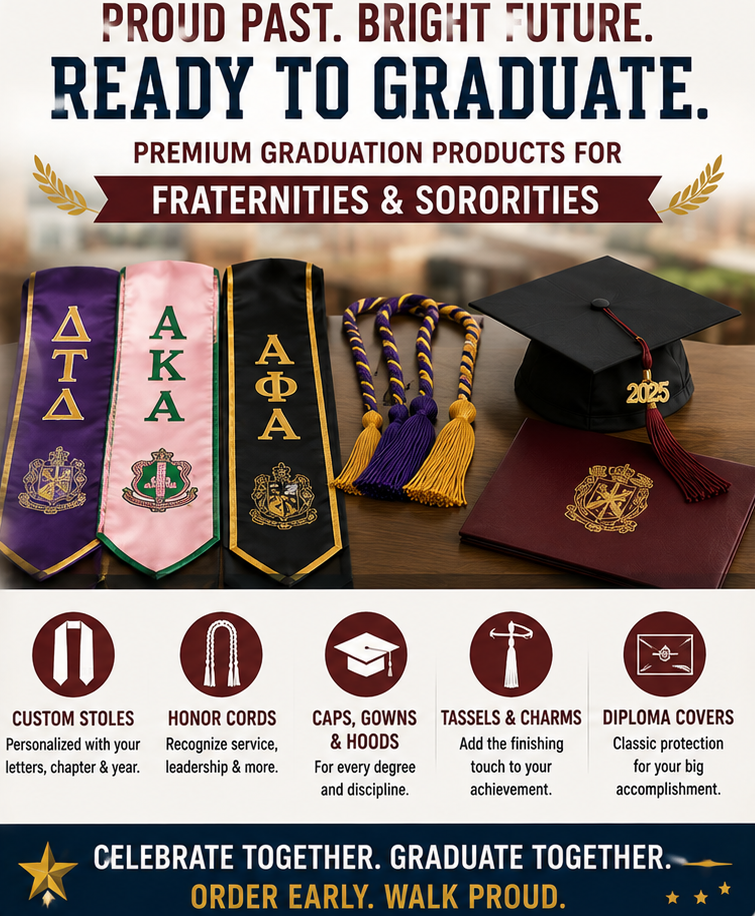
Educational achievement inside a state correctional system can take many forms. Participants may complete high school equivalency education, career training, occupational instruction, apprenticeships, workforce programs, certificates or college coursework. When an authorized program chooses to formally recognize those achievements, the merchandise needed for the ceremony should reflect the actual credential and the requirements of the institution.
Planning state correctional education graduation preschool regalia is therefore an institutional purchasing project rather than simply a traditional cap-and-gown order. Program administrators may need to coordinate participant quantities, sizes, educational credentials, approved products, correctional security requirements, state purchasing procedures, shipping instructions and the ceremony schedule.
This guide provides a different approach to correctional education graduation purchasing by organizing the process around the type of achievement, ceremony package, institutional approval and procurement workflow.
Why Correctional Education Recognition Requires a Specialized Purchasing Plan
An ordinary school graduation order typically involves students purchasing a predetermined package. A state correctional education program may operate differently.
The purchasing organization may be ordering for the entire graduating group. Several educational programs can participate in one recognition event, products may need institutional review before entering the facility, and merchandise may need to travel through government receiving procedures before reaching the education department.
Creating the purchasing plan before requesting pricing can reduce incorrect orders and unnecessary products.
First Question: What Achievement Is Being Recognized?
Before choosing a gown color or tassel, identify exactly what each participant completed.
Recognition Categories May Include:
- Adult basic education achievement
- GED or other high school equivalency completion
- Career and technical education
- Vocational training
- Occupational education
- Trade training
- Apprenticeship completion
- Workforce-development training
- Employment-readiness education
- Industry-related certification
- College certificate completion
- Associate degree completion
- Bachelor’s degree completion
- Other approved educational achievements
Programs and credentials differ among states, facilities and educational partners. Current offerings should be verified with the responsible organization.
Match the Recognition Products to the Credential
Once the achievements have been identified, purchasers can create a separate recognition package for each credential category.
This avoids using specialized academic regalia for a credential that does not require it and makes the purchasing request easier for suppliers to understand.
Package A: High School Equivalency Recognition
For an approved GED or high school equivalency recognition ceremony, the organization may consider a simple traditional graduation package.
A Potential Package Could Include:
- Graduation gown
- Mortarboard where approved
- Tassel
- Certificate cover
The responsible program determines whether all four components are appropriate.
Package B: Vocational and Trade Program Recognition
Vocational achievement can be recognized without suggesting that the participant earned a college degree.
A Vocational Ceremony Package Might Include:
- Standard ceremonial gown
- Approved graduation cap
- Tassel
- Certificate cover
- Program stole where authorized
- Achievement cord where authorized
The actual products should correspond to the program’s recognition practices and facility requirements.
Package C: Apprenticeship Completion
An apprenticeship ceremony may focus more heavily on presentation of the credential itself.
A certificate cover, standard gown and approved recognition accessory may provide an appropriate ceremony package where authorized.
Programs should avoid using degree-specific academic hoods simply to make an apprenticeship ceremony appear more formal.
Package D: Workforce and Employment-Readiness Achievement
Some educational recognition events may involve workforce development, employment preparation or other non-degree accomplishments.
These events do not necessarily require a complete cap-and-gown ensemble.
Alternative Recognition Products Can Include:
- Certificate covers
- Achievement cords
- Program stoles
- Standard gowns where appropriate
- Mortarboards and tassels where approved
Package E: College Degree Graduation
College degrees require additional attention because academic apparel can represent degree level and academic tradition.
If a correctional education participant receives a college degree, purchasers should obtain the regalia requirements from the degree-granting college or university.
College Regalia Should Follow the Educational Institution
A correctional institution should generally not create its own academic apparel specification for a partner college’s degree unless that arrangement has been authorized by the degree-granting institution.
Confirm:
- Degree level
- Exact degree
- Required gown
- Required headwear
- Tassel specification
- Whether an academic hood is required
- Academic hood specifications
- Any institution-specific requirements
Bachelor’s Degree Graduation Apparel
Bachelor’s regalia typically uses a bachelor-style gown with approved academic headwear and a tassel.
A bachelor’s hood should not be automatically included. Hood practices differ among institutions, and many colleges do not require one for bachelor’s graduates.
Master’s Degree Graduation Apparel
Master’s academic apparel generally differs from bachelor’s regalia, particularly in gown sleeve construction.
An academic hood may also be required. The hood should correspond to the actual degree and the requirements established by the degree-granting institution.
Doctoral Academic Apparel
Where applicable, doctoral regalia can include a specialized doctoral gown, academic hood and tam or other institution-approved headwear.
Custom doctoral apparel may require substantially more production time than standard graduation gowns.
Build a Ceremony Product Matrix
When several educational programs participate in the same ceremony, a simple matrix can help administrators separate requirements.
Example:
- GED graduates — standard ceremonial package
- Vocational completers — vocational recognition package
- Apprenticeship completers — certificate-focused package
- Workforce participants — approved recognition package
- College certificate recipients — program-specific package
- College degree recipients — institution-specified academic regalia
This method can be easier to manage than attempting to create one universal package for everyone.
Standardize Gowns Within Each Participant Group
If a group is using standard graduation gowns, consistency can improve the appearance of the ceremony.
Purchasing different gown models may produce variations in fabric, shade, sleeve construction, zipper design or finish even when the listed color appears identical.
Specify:
- Gown model or style
- Color
- Matte or shiny finish
- Size range
- Quantity
- Extended-size requirements
Matte and Shiny Gown Options
Both matte and shiny graduation gowns may be available for institutional recognition events.
A matte gown has a lower-reflection appearance, while shiny fabric creates more visible sheen. The choice can be based on the approved ceremony design, availability and budget.
Neither finish should be presented as an official correctional or state-government standard unless such a requirement has actually been established.
Choose Colors Based on the Program’s Requirements
Standard gowns may be available in colors such as black, navy, royal blue, maroon, red, white and other shades depending on the product line.
The purchasing organization should identify its preferred approved color before requesting the final quote.
Commercial color choices should not be assigned unofficial meanings such as “state corrections color” or “vocational graduation color.”
Create the Size Distribution Before Final Pricing
A total graduate count is not enough to complete a gown order. The supplier also needs to know how many gowns are required in each applicable size.
The institution can collect the measurements required by the selected manufacturer’s size chart and convert them into aggregate quantities.
Example Size Distribution:
- Size category 1 — 8 gowns
- Size category 2 — 17 gowns
- Size category 3 — 25 gowns
- Size category 4 — 16 gowns
- Size category 5 — 9 gowns
- Extended sizes — 5 gowns
Why Aggregate Sizing Can Be Useful
For many standard group orders, the supplier may only need the number of gowns in each size.
Using aggregate quantities where appropriate can reduce the need to transmit participant-specific information outside the institution.
The responsible organization should continue to follow applicable privacy, educational-record and correctional policies.
Do Not Use a Generic Size Chart From Another Supplier
Graduation gown sizing can vary between manufacturers and products.
The safest workflow is to identify the gown first and then use the current size chart associated with that particular product.
Extended Sizes Should Be Included in the First Inventory Check
Waiting until the end of the purchasing process to identify extended sizes can create availability problems.
Include them with the initial quantity request so the supplier can determine whether the same style and color can support the complete group.
Mortarboard Planning for Correctional Education
A traditional graduation cap may be appropriate for some ceremonies, but a correctional institution should determine whether the proposed product is acceptable before purchase.
Commercial availability should never be interpreted as facility approval.
Tassel Planning
Tassels can provide a traditional graduation appearance and may be available in numerous colors.
Determine:
- Approved tassel color
- Quantity
- Whether a year charm is needed
- Whether the tassel is packaged with the cap
- Whether program distinctions are being used
Reusable vs. Year-Specific Merchandise
Recurring correctional education ceremonies may benefit from separating merchandise that can be used in future years from products carrying a specific graduation year.
This can reduce excess dated inventory when participant counts change.
Make Certificate Presentation a Major Part of the Plan
Correctional education ceremonies frequently recognize achievements that result in certificates or other completion documents.
For these programs, a certificate cover may be as important to the ceremony as the gown itself.
Certificate Cover Purchasing Checklist
- Measure the actual credential
- Confirm width and height
- Confirm orientation
- Select cover color
- Determine quantity
- Choose blank or customized cover
- Confirm institutional approval
- Allow additional time for customization
Consider Blank Covers for Multi-Program Use
Blank certificate covers can potentially serve several educational programs when the credential dimensions are compatible.
This may simplify inventory and avoid creating a different custom cover for every class or program.
When Custom Certificate Covers Make Sense
A custom cover may be appropriate when the educational organization wants authorized wording or artwork incorporated into the ceremony presentation.
Custom merchandise requires additional planning because artwork approval, production and institutional authorization may take time.
Government Logos Require Authorization
A state seal, department of corrections emblem, facility logo or other government identifier should not be reproduced on commercial merchandise without appropriate authorization.
The same principle applies to college, university, training-provider and credentialing-organization logos.
Stoles Can Distinguish Approved Programs
A stole can potentially distinguish graduates from a particular authorized educational program.
For example, an institution could establish an approved stole for a particular training category. The institution—not the commercial supplier—should determine its meaning.
Achievement Cords Should Have Defined Eligibility
If cords are used, administrators should define who qualifies for each distinction before purchasing them.
Color meanings vary among institutions. A generic internet chart should not be treated as evidence that a cord color carries an official meaning within a state correctional system.
A Simpler Package Can Reduce Procurement Complexity
Every additional accessory increases product count, cost, inventory handling and potentially institutional review.
Rather than adding accessories automatically, ask whether each item has a defined purpose in the ceremony.
Determine the Quantity of Every Individual Product
A graduating class of 75 does not necessarily require 75 units of every accessory.
For Example:
- 75 gowns
- 75 approved caps
- 75 tassels
- 75 certificate covers
- 24 vocational program stoles
- 12 achievement cords
- 4 academic hoods
Item-by-item quantity planning can reduce over-ordering.
Plan for Participant Count Changes
Graduating cohorts can change between initial planning and the ceremony.
Where appropriate, administrators can determine whether a small contingency quantity is reasonable for standard merchandise while avoiding unnecessary excess inventory.
Small Program Orders
Not every state correctional education ceremony involves a large graduating class.
A supplier that offers individual items or no minimum quantity where applicable may be useful for smaller cohorts.
Custom merchandise can have different minimum quantities and should be evaluated separately.
Bulk Correctional Education Orders
Programs with larger graduating groups may benefit from bulk graduation gown purchasing.
Providing complete quantities, size distributions and accessory requirements at the quotation stage can help the supplier determine inventory and applicable institutional pricing.
Create a Master Order Worksheet
A central purchasing worksheet can help the education department, procurement personnel and supplier work from the same specifications.
Recommended Fields:
- Program
- Credential
- Participant quantity
- Gown model
- Gown color
- Finish
- Size quantities
- Extended sizes
- Cap quantity
- Tassel quantity and color
- Certificate-cover specification
- Stoles
- Cords
- Academic regalia
- Customization
- Approval status
- Required delivery date
Facility Review Should Occur Before the Final Order
Correctional facilities can have product and receiving requirements that differ from ordinary educational institutions.
Authorized personnel should determine whether the proposed merchandise is appropriate before funds are committed.
Review Individual Components
A supplier may sell a cap, gown and tassel as a set, but the facility should consider each component according to its own requirements.
Products That May Require Review Include:
- Graduation gowns
- Mortarboards
- Tassels
- Decorative charms
- Stoles
- Cords
- Certificate covers
- Diploma covers
- Academic hoods
- Tams
- Custom decorations
- Packaging
Never Assume a Product Is “Prison Approved”
A commercial graduation item should not be described as approved by a correctional system simply because it has previously been sold for an educational purpose.
Requirements can vary by state, agency, facility and transaction.
Authorized correctional personnel determine what merchandise is permitted for the applicable location.
Ask for Product Information Before Purchasing When Needed
If the institution needs additional product information for review, the purchaser can request available specifications from the supplier before finalizing the order.
This approach is preferable to discovering after delivery that a component does not satisfy an institutional requirement.
Packaging Should Be Part of the Purchasing Discussion
A large shipment may be easier to receive and distribute when products are logically organized.
Where supplier capabilities and facility procedures allow, purchasers can discuss grouping gowns by size or separating accessories by product category.
Use Only the Information Necessary to Fulfill the Order
A graduation apparel supplier normally needs quantities, sizes, product specifications, purchasing information and an approved shipping destination.
There is generally no reason to provide unrelated correctional records or other unnecessary sensitive participant information simply to obtain gowns.
Prepare a Clear Institutional RFQ
A precise request for quote helps suppliers understand what they are being asked to provide.
Include Where Applicable:
- Exact product description
- Quantity
- Size distribution
- Color
- Finish
- Cap specification
- Tassel specification
- Certificate-cover dimensions
- Stole and cord requirements
- Academic hood requirements
- Customization
- Packaging instructions
- Delivery destination
- Required delivery date
- Applicable procurement instructions
Why Detailed Specifications Improve Quote Comparison
Two suppliers may describe their products differently. A detailed RFQ makes it easier to determine whether quotations actually represent equivalent merchandise.
This is especially important when one price includes a complete masters cap and gown set and another covers only the gown.
Compare Total Delivered Cost
Institutional buyers can compare more than unit price.
Total Cost May Include:
- Graduation gowns
- Caps
- Tassels
- Certificate covers
- Stoles and cords
- Academic regalia
- Customization
- Packaging requirements
- Shipping
- Other applicable transaction costs
Calculate Cost by Recognition Package
When several programs participate in one ceremony, calculate the estimated cost of each package separately.
This can help administrators understand the cost of GED recognition, vocational recognition and college academic regalia rather than averaging dissimilar products together.
Ask About Institutional and Volume Pricing
Organizations purchasing coordinated quantities can ask whether institutional pricing or volume discounts apply to the proposed order.
Actual pricing can depend on product type, quantity, sizes, customization, accessories, inventory and shipping requirements.
Confirm Inventory Across the Entire Order
Before authorization, determine whether the supplier can fulfill all required components.
Inventory Confirmation Should Cover:
- Every gown size
- Extended sizes
- Required colors
- Caps
- Tassels
- Certificate covers
- Stoles
- Cords
- Academic hoods
- Specialized academic apparel
Stocked Products and Custom Products Have Different Timelines
Stocked gowns and accessories may be available for faster processing than merchandise requiring customization.
Custom stoles, decorated certificate covers, specialized academic hoods and custom doctoral apparel can require additional production time.
Plan the Order Around Four Timing Stages
1. Approval and Procurement
Time needed for product review, quotation, purchasing authorization and other required government procedures.
2. Supplier Processing or Production
Time needed to prepare stocked merchandise or manufacture custom products.
3. Transportation
Time required for the carrier to deliver the shipment.
4. Facility Receiving and Distribution
Time needed for receiving, inspection and internal delivery to the education program.
The ceremony schedule should account for all four stages.
Expedited Shipping Cannot Solve Every Timing Problem
Expedited carrier service may shorten transportation time when available, but it cannot eliminate procurement approvals, product review, custom manufacturing, supplier processing or correctional receiving procedures.
Confirm the Correct Delivery Destination
Correctional complexes and government agencies can have different mailing, administrative and commercial receiving locations.
Never assume that an address found in a public directory is the appropriate address for a graduation supply shipment.
Verify:
- Agency name
- Exact institution
- Department or receiving unit
- Approved delivery address
- Attention line
- Purchase reference
- Labeling instructions
- Carrier restrictions where applicable
- Receiving procedures
State Purchasing Procedures Are Not the Same Everywhere
Each state maintains its own procurement structure. Requirements may also vary among departments and according to the value or type of transaction.
The authorized purchasing office should determine which procedure applies to the specific graduation supply requirement.
Potential State Purchasing Methods
Depending on applicable law and agency policy, a qualifying purchase could potentially involve:
- Authorized purchasing methods for lower-value transactions
- Competitive quotations
- Existing state contracts
- Formal solicitations
- Purchase orders
- Authorized payment cards
- Other approved procurement mechanisms
This list does not establish which method applies to any particular state or transaction.
Verify Vendor Requirements Through Official State Systems
Some state transactions may require vendor registration or other supplier documentation.
Purchasing personnel should verify these requirements through the applicable official state procurement resources.
A commercial website stating that it serves government customers should not be treated as proof of state-contract status or vendor eligibility.
Purchase Orders Should Be Confirmed With the Supplier
If the purchasing organization intends to use a purchase order, confirm the supplier’s current PO policy and payment terms before issuing the order.
The ability to provide a quotation does not automatically establish purchase-order acceptance.
Custom Branding Requires Proper Authorization
Custom stoles, certificate covers or other products can potentially incorporate authorized program branding.
State seals, correctional agency insignia, facility logos, college trademarks and other protected marks should only be reproduced when the purchaser has appropriate authority and the supplier can lawfully fulfill the request.
State Correctional Education Graduation Purchasing Checklist
- Identify the educational programs
- Identify each credential
- Separate degree and non-degree achievements
- Determine the ceremony format
- Create a package for each participant category
- Select gown style and color
- Choose matte or shiny finish
- Prepare quantities by size
- Include extended sizes
- Determine cap requirements
- Select tassels
- Measure certificates
- Select certificate covers
- Identify approved stoles and cords
- Obtain college regalia requirements
- Determine customization needs
- Complete applicable facility review
- Prepare the institutional RFQ
- Compare equivalent quotations
- Verify complete inventory
- Confirm procurement requirements
- Confirm payment arrangements
- Verify the receiving destination
- Confirm processing and production schedules
- Choose the shipping method
- Allow time for facility receiving and distribution
Questions Institutional Buyers Should Ask Suppliers
- What gown styles are currently available?
- What sizes can be supplied?
- Are extended sizes available?
- Which colors are stocked?
- Are both matte and shiny gowns offered?
- Can gowns be purchased individually?
- Can small groups be accommodated?
- Can bulk quantities be supplied?
- Are mortarboards available separately?
- Which tassel colors are available?
- Are certificate and diploma covers available?
- Are stoles and cords available?
- Can bachelor’s, master’s and doctoral regalia be supplied?
- Are academic hoods available?
- Can authorized custom products be produced?
- Can product specifications be provided?
- Can a formal quote be prepared?
- Is institutional or volume pricing available?
- What products are stocked?
- What products require production?
- What is the processing timeframe?
- What shipping methods are available?
- Are expedited options available?
- What payment methods are accepted?
- Are purchase orders accepted for qualifying orders?
How Cap and Gown Outlet Can Support Institutional Education Orders
Cap and Gown Outlet is an independent commercial supplier of graduation apparel, academic regalia and educational recognition merchandise.
Available product categories can include graduation gowns, mortarboard caps, tassels, certificate covers, diploma covers, graduation stoles, honor cords, achievement cords, bachelor’s regalia, master’s regalia, doctoral regalia, academic hoods and related commencement products.
State agencies, correctional education departments, educational providers and other qualifying organizations can evaluate available merchandise based on their approved product specifications, quantities, sizes, ceremony requirements and purchasing procedures.
Potential Institutional Supply Capabilities
- Individual graduation merchandise
- Small-cohort orders
- Bulk cap-and-gown orders
- No minimum quantity where applicable
- Multiple gown sizes
- Extended sizes where available
- Multiple gown colors
- Matte and shiny options where available
- Graduation caps
- Tassels
- Certificate covers
- Diploma covers
- Graduation stoles
- Honor and achievement cords
- Bachelor’s academic regalia
- Master’s academic regalia
- Doctoral academic regalia
- Academic hoods
- Formal institutional quotations
- Institutional and volume pricing
- Nationwide U.S. shipping
- Fast processing for qualifying stocked merchandise
- Expedited transportation options where available
Product availability, pricing, minimum quantities, sizes, customization, processing, shipping, payment methods, purchase-order acceptance and government-purchasing capabilities should be confirmed for the specific transaction.
Independent Supplier Disclosure
Cap and Gown Outlet is an independent commercial graduation apparel and educational recognition supplier.
Cap and Gown Outlet is not affiliated with, endorsed by, sponsored by, authorized by, or acting on behalf of any state government, state department of corrections, correctional institution, department of education, college, university, vocational program, educational provider, credentialing organization or government contractor unless a specific official relationship has been separately established.
References to state correctional education programs, state prison education, GED education, vocational training, apprenticeships, college-in-prison programs, state procurement and government graduation supplies describe potential commercial uses of graduation merchandise. They do not establish correctional approval, government endorsement, a procurement award, state-contract status, approved-vendor status or an official partnership.
Frequently Asked Questions About State Prison Education Graduation Regalia
What graduation products can a correctional education program consider?
Depending on the credential and institutional requirements, products can potentially include gowns, mortarboards, tassels, certificate covers, diploma covers, stoles, cords and degree-specific academic regalia.
Do all correctional education graduates need a cap and gown?
No. The appropriate recognition format depends on the educational achievement and the responsible organization’s ceremony plan.
Can GED graduates use traditional graduation gowns?
Potentially. Standard gowns, approved mortarboards, tassels and certificate covers may be considered for an authorized high school equivalency recognition ceremony.
What should vocational training graduates wear?
A vocational program may use standard ceremonial apparel and certificate-presentation products where appropriate. Degree-specific academic regalia should not be used merely to make the ceremony appear more formal.
Can apprenticeship completion be recognized with graduation merchandise?
Potentially. A program may consider certificate covers, standard gowns or approved recognition accessories depending on its ceremony format and institutional requirements.
Who determines the regalia for college graduates?
The requirements of the degree-granting college or university should guide academic regalia selection.
Does a bachelor’s graduate always wear an academic hood?
No. Practices vary among institutions, and many colleges do not require bachelor’s hoods.
Can correctional education programs order small quantities?
Some graduation merchandise may be available individually or with no minimum quantity where applicable. Custom products can have separate minimum requirements.
Can state correctional systems purchase graduation gowns in bulk?
Bulk quantities may be available. Buyers should provide a complete size distribution and product specification when requesting institutional pricing.
Are certificate covers useful for vocational programs?
Yes. Where appropriate, certificate covers can provide a professional presentation for vocational, apprenticeship, workforce and other non-degree credentials.
Can correctional programs create custom graduation stoles?
Potentially, when authorized. The responsible organization should establish the wording, design, eligibility and any branding requirements.
Are commercially available graduation caps automatically permitted in correctional facilities?
No. Commercial availability does not establish facility approval. Authorized correctional personnel determine whether merchandise satisfies applicable requirements.
Can a supplier call its products DOC approved?
Such a claim should only be made when the applicable correctional authority has actually established that approval. Requirements can vary among states and facilities.
Can state agencies request formal graduation-supply quotations?
A supplier may be able to provide a formal institutional quotation for a defined requirement, subject to its current capabilities and terms.
Does a quotation mean the supplier accepts state purchase orders?
No. Purchase-order acceptance and payment terms should be separately confirmed.
Is Cap and Gown Outlet an official state correctional supplier?
No official relationship should be inferred. Cap and Gown Outlet is an independent commercial supplier unless a particular government contract or other official relationship has actually been established.
Creating a Ceremony-Ready Correctional Education Order
The most efficient purchasing process begins by separating participants according to the educational achievement they are receiving. GED, vocational, apprenticeship, workforce, certificate and college degree accomplishments can then be assigned an appropriate recognition package.
Administrators can next determine gown specifications, collect aggregate sizes, identify extended-size requirements, select approved caps and tassels, measure certificates and establish which participants qualify for stoles, cords or academic regalia.
Before ordering, authorized personnel should complete applicable institutional and security review. This is especially important for products containing separate components such as mortarboards, tassels, charms, cords, hoods, tams and presentation covers.
A detailed institutional RFQ can then be used to obtain comparable quotations. Buyers can evaluate the complete delivered cost, inventory, processing requirements, customization, shipping and supplier purchasing terms rather than focusing only on the advertised price of a gown.
Finally, the purchasing schedule should leave sufficient time for state procurement procedures, supplier processing, custom production where applicable, transportation, correctional receiving, inspection and internal distribution.
Cap and Gown Outlet can be considered as an independent commercial source of graduation gowns, caps, tassels, certificate covers, recognition accessories and academic regalia for qualifying state correctional education purchases, subject to facility approval, current product availability, purchasing terms and applicable state procurement requirements.