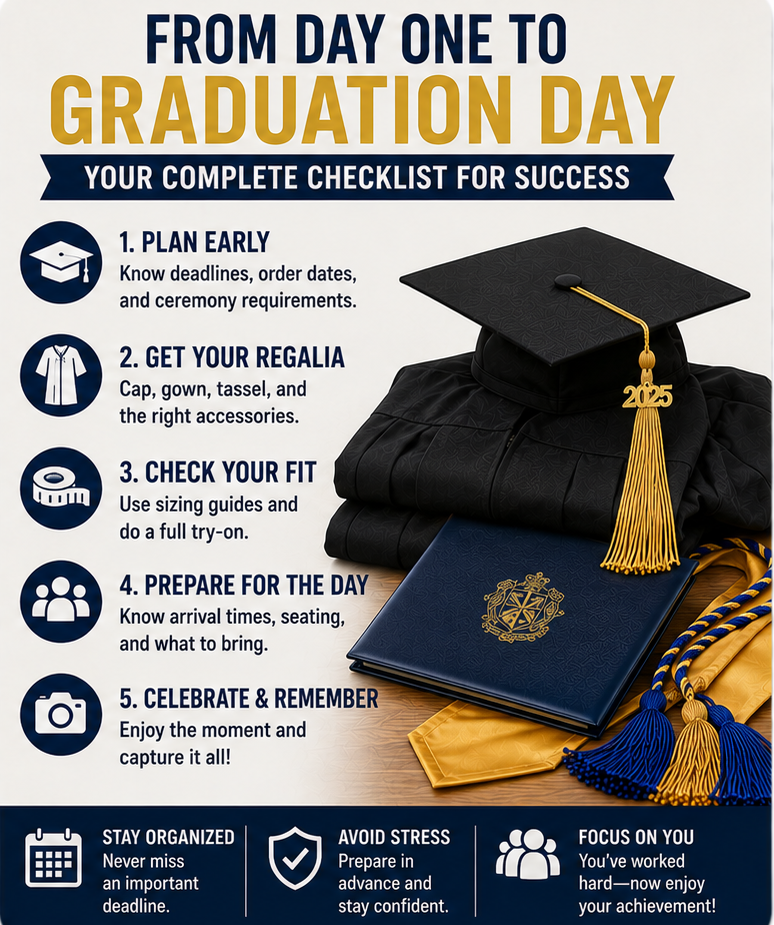
Graduation is an exciting milestone, but a smooth commencement experience requires preparation. Between ordering academic regalia, confirming ceremony instructions, arranging guest tickets, planning transportation, and getting ready for photographs, graduates have many details to manage. This graduation planning guide provides a practical timeline for preparing for commencement and making sure your cap, gown, accessories, and graduation-day plans are ready before the ceremony.
Start With Your School’s Official Graduation Information
Every school handles commencement differently. Before purchasing graduation products or making plans, review the information provided by your school, college, university, or program.
Pay particular attention to deadlines. Some graduation tasks may need to be completed well before the actual ceremony.
Important Information to Find
- Graduation application requirements
- Commencement registration deadline
- Academic regalia requirements
- Cap and gown ordering information
- Guest ticket procedures
- Graduation rehearsal information
- Graduate arrival time
- Parking and transportation instructions
- Venue security policies
- Weather procedures for outdoor ceremonies
Create Your Personal Graduation Timeline
Instead of trying to remember every deadline, create a simple graduation calendar. Add each school deadline as soon as it is announced and work backward from commencement day.
Your Timeline May Include
- Apply for graduation
- Register for commencement
- Order graduation regalia
- Order customized accessories
- Reserve graduation photographs
- Request or distribute guest tickets
- Attend commencement rehearsal
- Receive and inspect regalia
- Prepare the gown
- Complete a full dress rehearsal
Understand Exactly What Graduation Regalia You Need
Academic regalia can vary by degree level and institution. Before buying a graduation cap and gown, confirm the specifications required for your ceremony.
Do not choose academic attire based solely on appearance. A gown that looks similar to the required style may still have the wrong construction, color, or fabric finish.
Verify Your Regalia Specifications
- Degree level
- Gown style
- Gown color
- Matte or shiny finish
- Mortarboard or tam
- Tassel color
- Academic hood requirements
- Permitted recognition accessories
Bachelor’s Graduation Preparation
Bachelor’s graduates commonly wear a bachelor’s-style gown with a mortarboard and tassel, subject to the institution’s requirements.
If you are purchasing your own bachelor cap and gown set, compare the school’s specifications with the product before placing the order. Pay attention to color and finish as well as gown style.
Master’s Graduation Preparation
Master’s graduates generally need degree-appropriate academic attire rather than a standard bachelor’s gown.
A master’s ensemble may include a master’s gown, mortarboard or other approved headwear, tassel, and an academic hood. Verify the hood requirements carefully because academic hoods can contain degree- and institution-related specifications.
Doctoral Graduation Preparation
Doctoral graduation regalia can be more detailed. A doctoral graduate may need a doctoral gown with distinctive design elements, an academic hood, and a tam or other approved academic headwear.
Because requirements vary, doctoral students should verify the entire ensemble with their institution before ordering rather than assuming that any doctoral package is appropriate.
Order Your Graduation Attire With Time to Spare
Avoid planning around the package arriving immediately before commencement. You need enough time to receive the order, inspect the products, check the gown size, prepare the fabric, and address possible concerns.
Additional planning time may be necessary for customized products, large group orders, or graduation-season shipping.
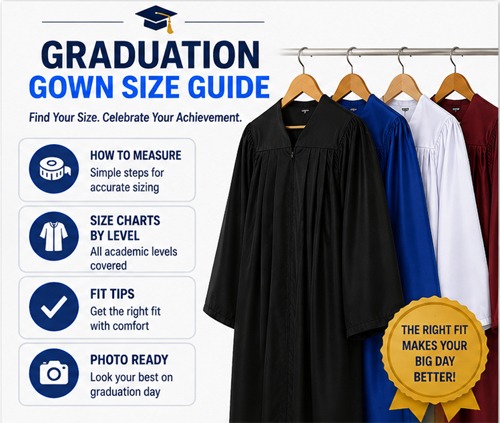
How to Choose the Correct Graduation Gown Size
Academic gown sizing is not always the same as ordinary clothing sizing. Many graduation gowns are selected primarily according to height, while some products also use weight ranges or additional body measurements.
Use the sizing information provided for the exact gown you intend to purchase.
Measure Before Ordering
Do not guess your height or automatically select your normal clothing size. Accurate information reduces the likelihood of receiving a gown that is noticeably too long, too short, or uncomfortable.
Inspect Your Graduation Order Immediately
When your graduation package arrives, open it promptly. Do not place the unopened box in a closet until commencement week.
Confirm That You Received
- The correct graduation gown
- The correct gown size
- The correct color
- The correct fabric finish
- The required cap or tam
- The correct tassel
- The academic hood when required
- Any separately ordered accessories
Try On the Gown Well Before Graduation
Trying on the gown immediately allows you to check the overall fit and length. Walk around while wearing it and make sure you can move comfortably.
If you are wearing formal clothing underneath the gown, consider using similar clothing during the fitting so you can evaluate the complete fit more accurately.
Prepare Your Mortarboard or Doctoral Tam
Your academic headwear should fit securely enough for walking, photographs, and the ceremony.
Graduates wearing mortarboards should test the cap in advance. Doctoral graduates should confirm how their institution expects the approved tam or other headwear to be worn.
Understand Your Tassel Requirements
Tassels can vary by institution, program, and ceremony. Some include a graduation-year charm, while others may follow specific school color requirements.
Schools may also provide instructions about where the tassel should be positioned before and after the degree is conferred. Follow the directions given for your ceremony.
Prepare Your Academic Hood
If you are earning a master’s or doctoral degree, confirm that you have the correct graduation hood and understand how it will be worn.
Some ceremonies include a formal hooding process, while others expect graduates to arrive wearing their academic hood. Check your institution’s instructions.
Understand the Difference Between Hoods, Stoles and Cords
These graduation items are not interchangeable.
Academic Hood
An academic hood is part of degree-level regalia commonly associated with master’s and doctoral degrees.
Graduation Stole
A stole may represent an approved organization, program, service activity, leadership role, or other recognized distinction.
Honor Cords
Cords may recognize academic achievement, membership, service, leadership, or another distinction established by the institution or organization.
Confirm Which Graduation Accessories You Can Wear
Do not assume that every graduation accessory can be added to your outfit. Institutions may restrict which stoles, cords, medals, pins, or other items can be worn during commencement.
Confirm both eligibility and ceremony policy before purchasing recognition accessories.
Plan What You Will Wear Under the Gown
Your graduation gown covers most of your clothing, but the neckline, lower legs, and shoes usually remain visible.
Select clothing that is appropriate for the event while considering weather, comfort, walking, stairs, and the amount of time you may spend standing.
When Choosing Your Outfit, Consider
- School dress guidance
- Ceremony formality
- Indoor or outdoor venue
- Expected temperature
- Walking distance
- Stairs or stage ramps
- Photography
Choose Graduation Shoes for Comfort and Safety
Commencement can involve much more walking than expected. Graduates may travel across campus, stand in staging areas, walk in a processional, climb stairs, cross a stage, and remain standing for photographs afterward.
Select shoes that are comfortable and appropriate for the venue. Outdoor ceremonies may also involve grass or uneven surfaces.
Prepare Your Graduation Gown Before the Ceremony
Gowns often develop creases while folded for packaging and shipping. Remove the gown from its packaging early and hang it properly.
Follow the garment’s care instructions when addressing wrinkles. Academic gowns are often made with synthetic fabrics that may be sensitive to excessive heat.
Complete a Full Graduation Dress Rehearsal
A few days before commencement, put on everything you expect to wear. This is one of the simplest ways to discover a missing or incorrectly fitted item before graduation day.
Test the Complete Outfit
- Clothing worn underneath
- Graduation gown
- Mortarboard or tam
- Tassel
- Academic hood
- Approved graduation stole
- Honor cords
- Permitted medals
- Graduation shoes
Practice Walking in Your Graduation Outfit
Take a few minutes to walk normally while wearing the gown and shoes. If possible, practice using stairs as well.
The objective is simply to make sure your outfit allows comfortable movement before you need to cross the commencement stage.
Plan Your Graduation Photographs in Advance
Graduation day can become crowded quickly. Decide before the ceremony which photographs matter most and where you would like to take them.
Popular Graduation Photo Ideas
- Traditional cap-and-gown portrait
- Full-length regalia photograph
- Graduate with parents or family
- Graduate with classmates
- Graduate with professors or teachers
- Photograph near a campus landmark
- Degree hood portrait
- Graduation stole and honor cord portrait
- Diploma or diploma-cover photograph
Take Some Pictures Before Commencement
Graduation attire is often at its neatest before the ceremony, and campus locations may be less crowded earlier in the day.
Taking several important family and individual photographs before commencement can also reduce the pressure to capture every picture afterward.
Check Graduation Tickets Early
If your institution requires guest tickets, determine how they are issued and when they must be claimed or transferred.
Do not wait until graduation morning to distribute tickets if they can be given to guests earlier.
Give Guests Their Own Graduation Information
Graduates may have different arrival instructions from guests. Send family and friends the information relevant to them rather than assuming they can follow the graduate’s schedule.
Guests Should Know
- Ceremony location
- Guest entrance
- Parking instructions
- Ticket requirements
- Security or bag policies
- Recommended arrival time
- Accessibility information when needed
- Post-ceremony meeting location
Plan Transportation Before Graduation Day
Large commencement ceremonies can create significant campus and venue traffic. Review parking maps, road closures, shuttle information, and public transportation options when available.
Allow additional travel time rather than planning to arrive immediately before graduate check-in.
Know Your Graduate Check-In Time
The ceremony may begin at 10:00 a.m., but graduates could be required to report much earlier. Arrival time and ceremony start time should never be assumed to be the same.
Check exactly where graduates report and what identification or credentials are required.
Know Where You Will Sit and Line Up
Some commencements organize graduates according to college, school, department, degree, or another system. Others provide assigned seating.
Attend rehearsal when required and follow commencement staff instructions carefully.
Review the Ceremony Sequence
Knowing what to expect can make commencement easier to navigate.
A Ceremony May Include
- Graduate lineup
- Academic processional
- Opening remarks
- Speakers
- Degree conferral
- Graduate recognition
- Hooding when applicable
- Tassel movement when applicable
- Recessional
Prepare for an Outdoor Graduation Ceremony
Outdoor commencements require additional planning. Check the forecast and the institution’s weather procedures shortly before the event.
Consider
- Temperature
- Sun exposure
- Wind
- Rain procedures
- Grass or uneven walking surfaces
- How the gown adds an extra clothing layer
Check the Venue’s Bag and Security Policies
Many graduation venues restrict bag sizes or prohibit certain items. Read the rules before packing.
Avoid carrying unnecessary belongings because graduates may not have secure storage during the ceremony.
Create a Simple Graduation-Day Essentials List
Bring only what is required and permitted.
Depending on Venue Rules, You May Need
- Required identification
- Graduate credential or ticket
- Phone
- Necessary personal items
- Hairpins or similar items for securing a cap
- A small number of safety pins if permitted
Arrange a Meeting Point With Your Family
After commencement, thousands of graduates and guests may leave at the same time. Phone service can also become less reliable in a crowded venue.
Choose a specific landmark or meeting area before everyone separates for the ceremony.
Preparing for High School Graduation
High school graduates should carefully follow school instructions concerning high school caps and gowns, tassels, rehearsals, honor cords, stoles, tickets, and arrival times.
If students are responsible for obtaining their own gowns, the school should provide exact specifications to help maintain consistency across the graduating class.
Preparing for College Graduation
College graduates should verify both university-wide and school-specific commencement information. A university may hold a large commencement in addition to separate college, department, or program ceremonies.
Confirm which ceremonies you are attending and whether academic regalia is required for each.
Preparing for a Master’s Commencement
Master’s students should give particular attention to the academic hood. Confirm its specifications and determine whether graduates arrive wearing the hood or participate in a hooding process.
Preparing for a Doctoral Commencement
Doctoral graduates should review the requirements for the doctoral gown, hood, tam, tassel, and any formal hooding ceremony.
Try on the complete doctoral regalia before commencement because there are more components to coordinate than in a basic cap-and-gown set.
Preparing Children for Preschool or Kindergarten Graduation
For younger graduates, comfort and organization are especially important. Parents and teachers should check cap fit, gown length, and shoes before the event.
Schools distributing children’s graduation attire can label each set with the student’s name to make ceremony-day organization easier.
Preparing a Homeschool Graduation Ceremony
Homeschool families and organizations may have more flexibility when establishing graduation attire and ceremony traditions.
For group ceremonies, decide on gown colors, fabric finish, cap style, tassels, and other products before families begin ordering individually.
Graduation Preparation for Schools and Organizations
Schools, universities, homeschool organizations, and student groups managing a graduation group order should create a master graduate list before placing the final order.
Track for Each Graduate
- Name
- Degree level when applicable
- Height
- Gown size
- Cap or tam
- Tassel
- Academic hood when required
- Approved accessories
- Order status
- Distribution status
Inspect Bulk Graduation Orders When They Arrive
Organizations should open group shipments promptly and compare the contents with the master order.
Check quantities by size and verify caps, tassels, hoods, and accessories before distributing anything.
Distribute Regalia Before Commencement Week
When possible, give graduates their attire early enough to complete a fitting. This provides additional time to identify missing items, sizing concerns, or other order issues.
One Month Before Graduation
- Confirm commencement registration
- Confirm graduation regalia order
- Review guest ticket information
- Check ceremony schedule
- Plan photography
- Review transportation options
- Confirm any separate department ceremonies
One Week Before Graduation
- Complete a full regalia fitting
- Prepare the gown according to care instructions
- Verify the tassel
- Check the academic hood
- Organize approved stoles and cords
- Confirm graduate arrival time
- Send final information to guests
- Review parking and venue policies
- Check the weather forecast when relevant
The Day Before Graduation
Place everything together in one location so there is no need to search for individual pieces in the morning.
Prepare
- Graduation gown
- Cap or tam
- Tassel
- Academic hood
- Approved stoles
- Honor cords
- Clothing for under the gown
- Shoes
- Required identification
- Graduate credentials
Graduation Morning
Review your final checklist before leaving. Make sure you have every piece of required regalia and enough travel time to reach the graduate check-in location.
Avoid making major changes to your outfit or regalia at the last minute unless required.
Before Joining the Processional
Take a moment to check your appearance.
Final Regalia Check
- Gown positioned correctly
- Cap or tam secure
- Tassel correctly positioned according to ceremony instructions
- Academic hood arranged properly
- Stole centered
- Honor cords untangled
- Nothing unnecessary being carried
After You Cross the Stage
Continue following staff directions. Ceremonies may have specific routes for returning to your seat or exiting the stage.
Avoid stopping unexpectedly for photographs unless the ceremony has a designated photography location.
After Commencement
Once the ceremony ends, meet family and friends at the location selected beforehand. Take additional photographs while everyone is still wearing graduation attire.
Keep track of your cap, tassel, hood, stole, cords, phone, and other personal belongings during the celebration.
Common Graduation Planning Mistakes
- Missing the graduation application deadline
- Waiting too long to order regalia
- Buying attire before checking school specifications
- Ordering the wrong gown size
- Confusing bachelor’s and master’s gowns
- Ordering an incorrect academic hood
- Assuming every graduation accessory is permitted
- Leaving the gown folded until commencement day
- Not trying on the complete outfit
- Choosing uncomfortable shoes
- Confusing ceremony time with graduate check-in time
- Waiting until the last minute to distribute guest tickets
- Ignoring parking or venue restrictions
- Failing to establish a family meeting location
Complete Graduation Preparation Checklist
Graduation Regalia
- Correct degree-level gown
- Correct gown color and finish
- Correct gown size
- Mortarboard or doctoral tam
- Correct tassel
- Graduation-year charm when applicable
- Academic hood when required
- Approved stole
- Approved honor cords
- Other permitted recognition items
Ceremony Logistics
- Graduation application completed
- Commencement registration confirmed
- Graduate arrival time confirmed
- Check-in location confirmed
- Guest tickets distributed
- Parking planned
- Transportation arranged
- Venue policies reviewed
- Weather plan checked
- Family meeting location selected
Personal Preparation
- Complete outfit tried on
- Gown prepared
- Shoes tested
- Graduation photographs planned
- Phone charged
- Identification ready
- Permitted essentials packed
Frequently Asked Questions About Graduation Preparation
When should I start getting ready for graduation?
Begin when your institution releases commencement information. Some deadlines, including graduation applications and regalia orders, can occur well before the ceremony.
What graduation regalia do I need?
The required attire depends on your institution and degree. It may include a gown, mortarboard or tam, tassel, and an academic hood for applicable graduate degrees. Verify the exact requirements with your school.
When should I try on my cap and gown?
Try on your graduation attire soon after receiving it and complete another full fitting before commencement. This gives you time to identify potential issues.
Do I need a stole and honor cords?
Not every graduate needs them. Stoles and cords may represent specific approved distinctions, and institutions can establish rules regarding who may wear them.
Should I wear my academic hood before arriving?
Follow your institution’s instructions. Some ceremonies require graduates to arrive wearing their hoods, while others incorporate hooding into the ceremony.
What should I bring on graduation day?
Bring your required academic regalia, identification or graduate credentials, and only the personal items permitted by the venue. Review the school’s commencement checklist and security policies beforehand.
How early should I arrive for commencement?
Follow the graduate arrival time provided by your institution. Graduates are often required to arrive substantially earlier than guests because of check-in, lineup, and processional preparation.
Your Graduation Starts With Good Preparation
A memorable commencement does not require complicated planning, but it does require attention to the right details. Confirming deadlines early, purchasing the correct graduation cap and gown, checking your academic regalia, preparing guests, and understanding ceremony logistics can prevent many avoidable graduation-day problems.
Use your school’s official commencement instructions as your primary guide, prepare your graduation attire well before the ceremony, and complete a final checklist during graduation week. With the practical details handled in advance, you can focus on celebrating your accomplishment when commencement day finally arrives.